It’s 3 pm on Wednesday and despite your morning coffee your eyes might feel heavy. This feeling is completely normal because most of the professionals face it daily. The post-lunch slump isn’t just in your head-it’s a biological reality rooted in your circadian rhythm. What if there was a science backed solution that could restore your energy, sharpen your focus and improve your health in just 20 minutes? That is where power napping comes into picture. Just a 20 minute nap and everything feels amazing.
What is a Power Nap?
According to research that took place in China between 2974 people aged 65 and older, around 60% of participants reported napping after lunch for about an hour. Scientists also found out that people who power napped for 30 to 60 minutes had better word recall which is a sign of good memory.
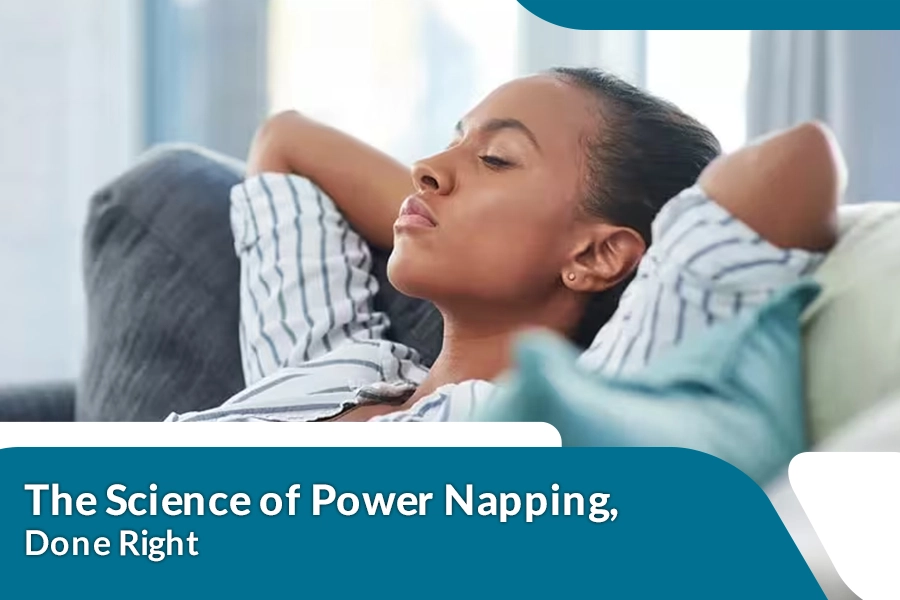
A power nap is a short 10 to 20 minutes sleep designed to quickly revitalize the mind and body. It is a highly effective tool for an instant energy boost, improved focus and better mood. Power naps are short and sweet. Daytime naps might be especially beneficial if you’re dragging after a lousy night’s sleep. Think of it as pressing the refresh button on your brain rather than shutting down the entire system.
What happens when you nap for 20 minutes?
There’s a decent amount of power napping science floating around now, mostly because people got tired of being tired and started asking why a quick nap sometimes fixes everything and sometimes makes things worse. The short version and this is the part most articles skip – is that it depends almost entirely on timing and length, not just on the act of closing your eyes.
A nap isn’t just “sleep, but shorter.” It’s a different animal. The brain doesn’t ease into rest the same way during a 20-minute nap as it does during an 8-hour night. And that’s really where power napping science gets interesting, because the research keeps circling back to sleep cycles, not sleeonp durati.
The whole sleep cycle naps thing
Sleep happens in stages. Light sleep, deeper sleep, REM. A full cycle takes roughly 90 minutes. Naps are usually too short to complete even one cycle, which sounds like a bad thing but is actually the entire point. Sleep cycle naps work because you’re catching just the first stage or two – light, restorative, doesn’t drag you into the deep stuff you’d have trouble climbing out of.
This is basically the foundation of power napping science. Not the only foundation, but a big one. If you nap long enough to hit deep sleep and then get yanked out of it, you wake up groggy, disoriented, sometimes worse off than before you napped. People call this sleep inertia. It’s real and it’s annoying and it’s the reason your coworker who “just closed his eyes for 45 minutes” looks like he got hit by a truck afterward.
Ideal nap length
Ask five people what the ideal nap length is and you’ll get five different answers, and honestly they’re all sort of right depending on what you’re optimizing for. 10-15 minutes: enough to feel a little sharper, not much else. 20 minutes: the sweet spot most research points to – light sleep only, no deep-stage hangover. 30 minutes: risky. You might catch the edge of deep sleep and wake up foggy. 90 minutes: a full cycle, including REM, can actually help with creativity and memory – but who has 90 minutes in the middle of a workday?
Most of the power napping science literature lands on that 20-minute mark as the practical sweet spot for adults trying to function through an afternoon. Not because it’s magic, just because it avoids the deep-sleep trap while still doing something.
The 20 minute nap isn’t a rule
People treat the 20 minute nap like it’s some kind of law carved into a lab wall. Some people’s cycles run faster, some slower – age changes it too, older adults tend to hit lighter sleep stages sooner, which changes the math a bit. But as a starting point, 20 minutes is fine. Set an alarm, don’t overthink it, see how you feel. If you’re groggier than before, shave five minutes off next time. If you still feel tired, maybe the problem isn’t the nap at all – maybe it’s that you didn’t sleep enough the night before and no nap is going to patch that hole properly.
Best nap time – and this part actually matters more than length
Here’s a thing that gets buried under all the “how long should I nap” content: best nap time matters just as much, maybe more. Early-to-mid afternoon, somewhere around 1 to 3 pm , lines up with a natural dip in alertness most people experience regardless of how much they slept the night before. It’s not really about being tired from work – it’s closer to a built-in circadian dip.
Nap too late in the day and you risk messing with nighttime sleep. Nap too early and your body isn’t really primed for it, so you just lie there annoyed. The window is narrower than people assume.
The afternoon energy slump is not just “being lazy”
Afternoon energy slump usually occurs between 1 and 4 pm . Your body naturally experiences a dip in core temperatures and alertness that usually mirrors the drowsiness that you feel before falling asleep. They are largely driven by a natural circadian rhythm dip, dehydration and insulin spikes. During this afternoon window, the body releases small amounts of melatonin which is a sleep hormone. Fighting against this natural rhythm often leads to decreased performance, increased errors and stress levels. There’s this weird cultural habit of treating the afternoon energy slump like a character flaw. Like if you were just disciplined enough you wouldn’t feel it. But it’s a physiological dip – cortisol drops, body temperature shifts slightly, and boom, you’re staring at your screen wondering why 2:30 pm feels like wading through mud.
This is honestly where power napping science gets practical for regular people, not just sleep researchers. You’re not lazy, your biology just does this thing. A short nap during that window can counter it better than pushing through with willpower alone, which, let’s be honest, doesn’t really work past a certain point anyway.
Best Sellers
-
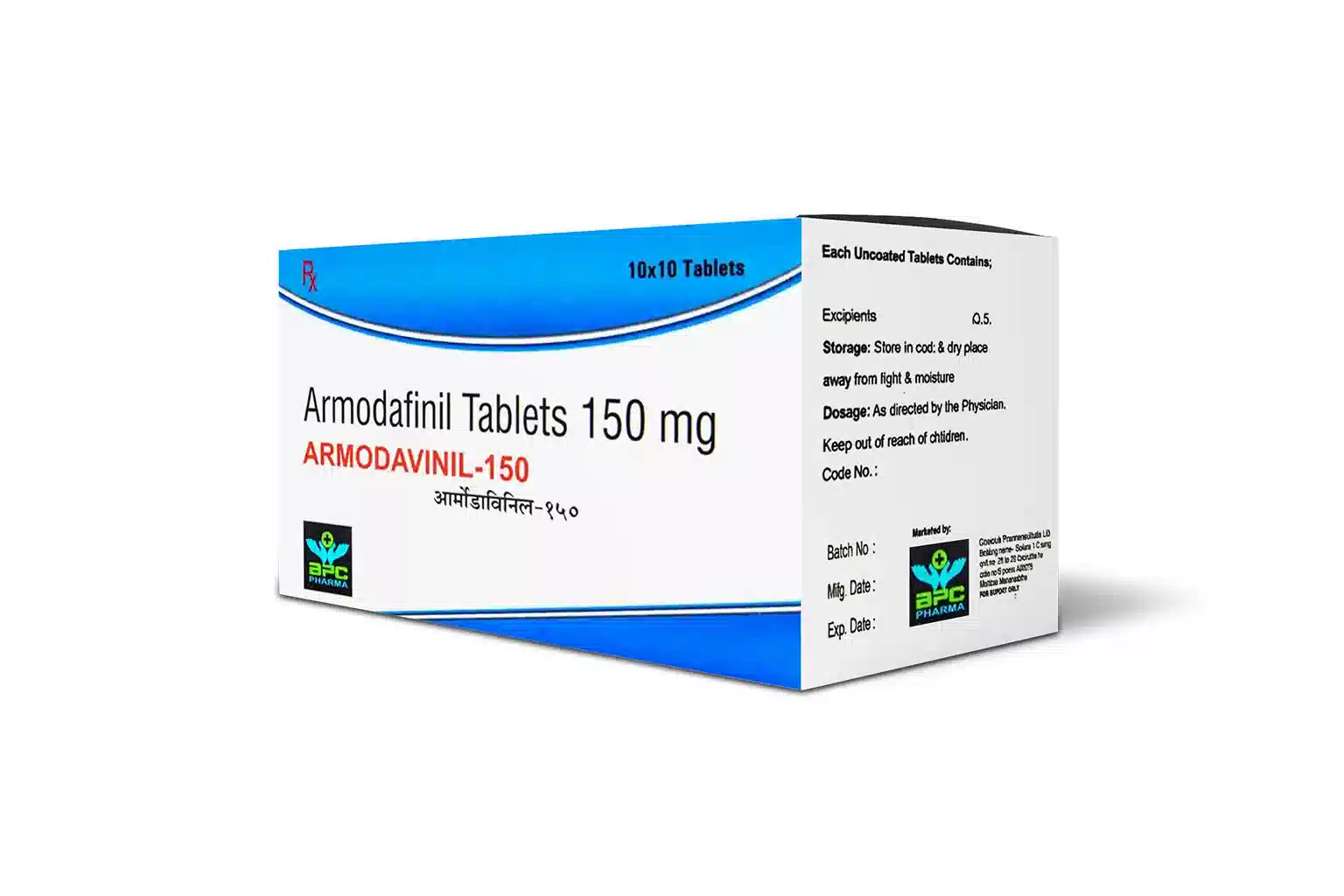
Armodavinil 150 mg (Armodafinil)
$69.00 – $449.00Price range: $69.00 through $449.00Shop Now This product has multiple variants. The options may be chosen on the product page -
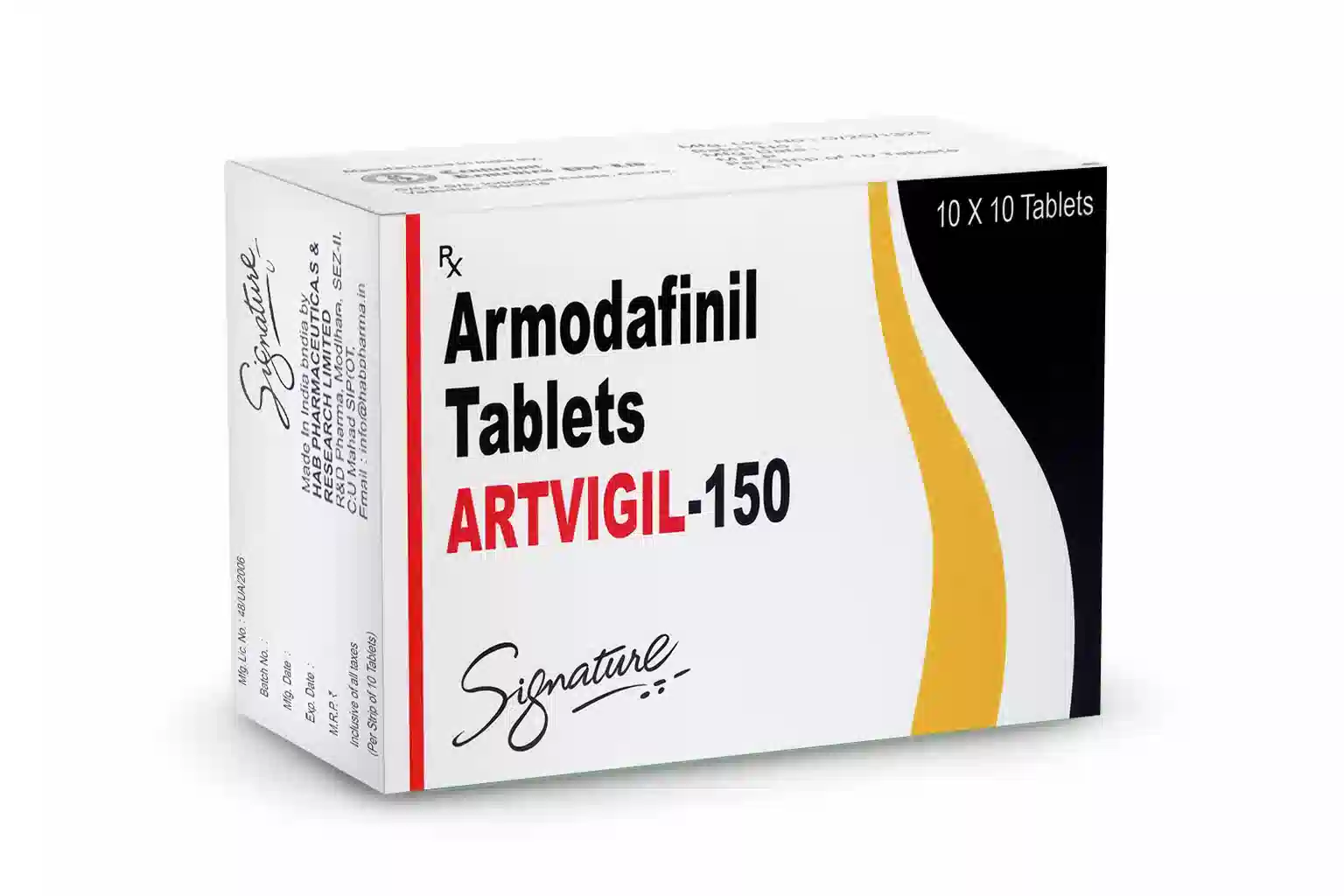
Artvigil 150 mg (Armodafinil)
$69.00 – $419.00Price range: $69.00 through $419.00Shop Now This product has multiple variants. The options may be chosen on the product page -
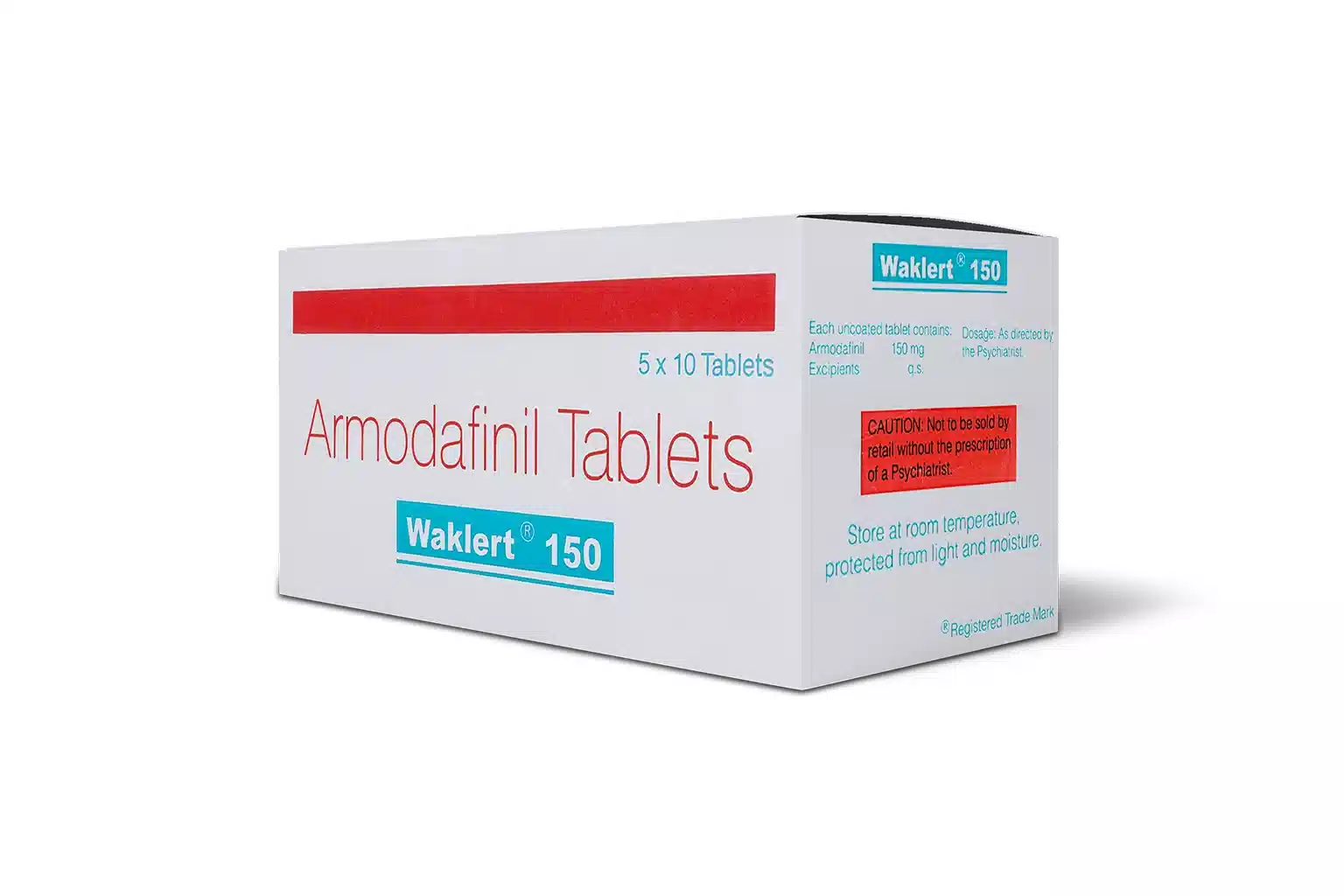
Waklert 150 mg (Armodafinil)
$69.00 – $449.00Price range: $69.00 through $449.00Shop Now This product has multiple variants. The options may be chosen on the product page -
Armodacare 150 (Armodafinil)
$69.00 – $419.00Price range: $69.00 through $419.00Shop Now This product has multiple variants. The options may be chosen on the product page -
Armodaxl 150 (Armodafinil)
$79.00 – $189.00Price range: $79.00 through $189.00Shop Now This product has multiple variants. The options may be chosen on the product page -
Vigilit 150 mg (Armodafinil)
$65.00 – $155.00Price range: $65.00 through $155.00Shop Now This product has multiple variants. The options may be chosen on the product page
Nap vs coffee - an old argument that doesn't need to be an argument
People love framing nap vs coffee like you have to pick a side. You don’t. Caffeine blocks adenosine receptors, which is the chemical that makes you feel sleepy in the first place – so it doesn’t actually reduce sleep pressure, it just masks it temporarily. A nap, even a short one, does something closer to actually relieving that pressure.
Some people combine both: the so-called “coffee nap,” where you drink coffee right before a 20 minute nap so the caffeine kicks in right as you wake up. Sounds flashy but it works decently for a lot of people. Power napping science doesn’t really take sides here either – it’s less about nap vs coffee and more about what your schedule allows.
Nap for energy vs nap to “catch up” on sleep debt
There’s a difference between using a nap for energy in the moment versus trying to use naps to make up for a genuinely bad night’s sleep. Naps can help a bit with the second one, but they’re not a real substitute. If someone’s chronically under-slept, a 20 minute nap for energy is a band-aid, not a fix. Power napping science is pretty clear that naps work best as a supplement to decent sleep, not a replacement for it – though obviously people keep trying to use them that way because life happens.
How to power nap without overthinking it
Honestly the mechanics of how to power nap are less complicated than the internet makes them sound. Find somewhere dim, not necessarily dark. Lie down or recline if you can – sitting upright works too, just less ideal. Set an alarm for 20 minutes, maybe 25 to account for falling-asleep time. Don’t stress about actually falling asleep – even resting with eyes closed gives some benefit. Get up right when the alarm goes, don’t snooze into deep sleep territory.
That’s basically it. No special breathing technique required, though some people swear by one.
Power nap benefits
The power nap benefits people report aren’t usually dramatic. Nobody wakes up feeling like a new person. It’s smaller stuff – slightly sharper focus, less irritability, that mental fog lifting a bit. Some studies tie naps to improved memory consolidation too, though that seems to lean more toward longer naps that include REM, not the quick 20 minute variety.
Nap productivity boost
Workplaces have slowly started warming up to the idea of a nap productivity boost being legitimate rather than someone slacking off. Some companies even have nap pods now, which felt like a joke a decade ago and now feels almost normal. The productivity angle checks out in a lot of the research, though it’s worth saying – it’s a boost, not a personality transplant. You’re not going to out-nap a genuinely bad workload or chronic burnout.
Final Thoughts
Power napping science keeps pointing back to the same handful of things – timing, length, and not fighting your own biology too hard. Twenty minutes, early afternoon, somewhere quiet-ish. That’s most of it. The rest is just personal trial and error, because bodies are annoyingly individual about this stuff and no single formula works for everyone exactly the same way.
While a well-timed power nap is enough for most people to regain focus and energy, persistent daytime sleepiness despite getting adequate sleep shouldn’t be ignored. It may indicate an underlying sleep disorder that requires medical evaluation. Treatments such as Waklert 150 mg may be recommended for eligible patients, but they should complement-not replace-good sleep hygiene.
FAQs
1. Is a 20-minute nap actually the best length?
For most adults, yes because it avoids deep sleep grogginess. Some people do fine with slightly more or less.
2. What’s the best time of day to nap?
Early-to-mid afternoon, roughly 1-3 pm, works best for most people’s natural energy dip.
3. Can naps replace lost nighttime sleep?
Not really. They work for a while but they are not a substitute for good, consistent sleep.
4. Is coffee before a nap actually useful?
Yes, for some people – caffeine kicks in right as a short nap ends, boosting alertness further.
5. Can Waklert 150 mg tablets replace a power nap?
No. Waklert 150 mg cannot replace power nap as it is a wakefulness promoting medication and does not reduce the body’s need for sleep.