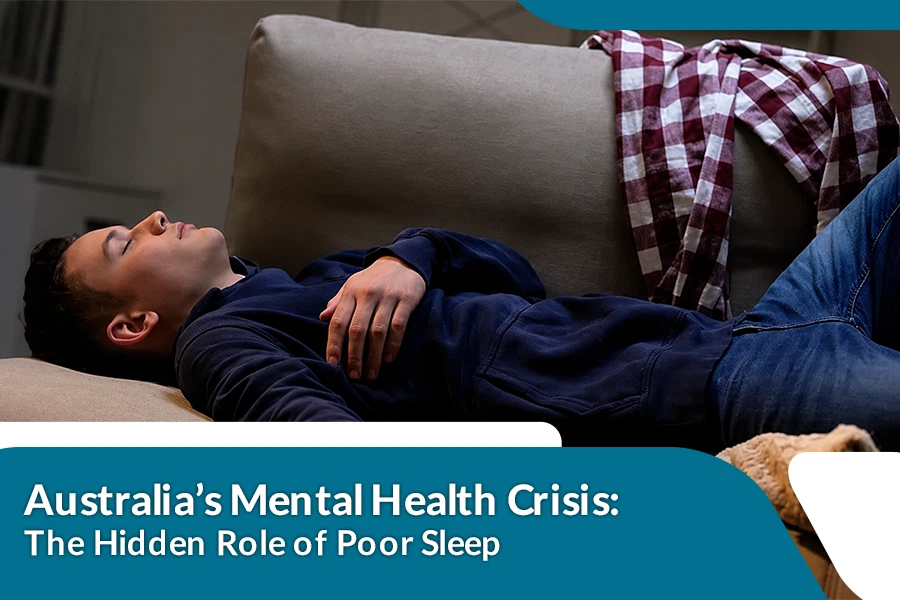
There’s been a lot of noise lately around mental health in Australia, and honestly, it doesn’t sound like a small issue anymore. Recent Australian news reports have kept pointing to rising psychological stress, low well-being, and people just not feeling like themselves.
That part is worrying enough. But what keeps getting left out, weirdly, is sleep. Not in a dramatic way, just in that quiet background way that makes it easy to ignore.
And maybe that’s the problem.
People talk about anxiety, burnout, work pressure, life getting more expensive, and all of that. Fair enough. But sleep often sits underneath it, almost hidden, and if it’s bad for long enough, everything else can start to wobble. That’s where Australia’s mental health conversations sometimes feel incomplete.
Poor sleep can make a bad week feel like a bad life. That sounds dramatic, maybe, but it’s also kind of true.
The sleep thing everyone skips over
The connection between sleep and mood is not exactly new, but people still underestimate it. You have one rough night, and maybe you feel edgy. A few rough nights and suddenly everything feels heavier.
Anxiety and disrupted sleep often feed each other. You’re tired, so you worry more. You worry more, so you sleep less. It becomes its own annoying loop.
Depression can bring fatigue too, the kind that makes even basic tasks feel unnecessarily hard. Not always sleepiness exactly, more like this dull drag that follows you around.
Then there’s chronic stress, which does strange things to the body. You may be exhausted, but your brain doesn’t know how to switch off. So you lie there, awake, thinking about everything and nothing.
That’s where people start getting brain fog, and honestly, it’s a terrible feeling. Concentration drops, memory gets fuzzy, and focus and productivity take a hit. You can be physically present and still feel oddly absent.
For many people dealing with Australian mental health concerns, the sleep issue is not just a side note. It’s part of the whole thing.
When daytime tiredness is more than “just stress”
A lot of people assume daytime sleepiness is just from being busy or anxious or not getting enough rest. Sometimes that’s true. But not always.
Persistent sleepiness can also point to a medical sleep disorder, and that’s where things get a bit more serious. Conditions like narcolepsy, shift work sleep disorder, and obstructive sleep apnoea can all disrupt proper rest and make the daytime feel impossible.
Narcolepsy, for example, isn’t just “being sleepy.” It can cause sudden sleep attacks and very strong daytime drowsiness. Shift work sleep disorder happens when your body clock keeps fighting your work schedule. And sleep apnoea can wake you repeatedly through the night without you fully realising it.
These are not things to guess at from the internet. They need proper assessment by a healthcare professional.
A lot of people keep pushing through, thinking they just need more coffee or better motivation. Sometimes the problem is bigger than that. Sometimes the body is asking for actual medical attention, not just discipline.
The boring habits that actually help
Sleep advice can sound painfully obvious, but that’s because the basics really do matter. Not always in a magical way, just in a steady, annoying, practical way.
A consistent sleep schedule helps more than people expect. Going to bed and waking up around the same time gives your body something to work with.
Screens before bed are another obvious one, and still most of us do it anyway. The light, the scrolling, the random stress from one extra article or message, it all adds up more than it should.
Regular exercise usually helps too, though not as some dramatic cure. It just seems to support better sleep over time, especially when done consistently.
Food matters as well. A balanced diet isn’t going to fix everything, but being underfed, over-caffeinated, or relying on junk all day can make sleep worse than it needs to be.
Stress-management techniques are worth taking seriously, even if the phrase sounds a bit polished. Breathing exercises, journaling, time away from work, talking to someone, none of it is perfect, but it can help soften the edge.
And if the symptoms just keep going, get medical advice. Don’t keep guessing forever.
That’s especially important when Australia’s mental health conversations start blending with physical fatigue and sleep issues. They overlap more than people think.
Where wakefulness meds fit in
This part gets misunderstood a lot, so it’s worth saying plainly.
Medicines such as Modafinil and Armodafinil may be prescribed by healthcare professionals for certain diagnosed sleep disorders to help improve wakefulness. They are not treatments for anxiety, depression, or other mental health conditions.
That distinction matters.
These medicines are sometimes discussed in relation to excessive sleepiness, and people looking into Modafinil Australia or Armodafinil Australia should understand they are not casual “energy pills.” They’re only appropriate in specific medical situations, and a doctor decides that, not the internet.
It can be tempting to connect tiredness with mood and then jump straight to anything that sounds like a fix. But wakefulness medication is not a substitute for sleep, and it’s definitely not a substitute for proper mental health care.
In the middle of all this, the line between poor sleep in Australia and broader wellbeing issues gets blurred. That’s why diagnosis matters so much. If the cause is medical, it should be treated like one.
A small note if you’re looking into this
If you’re researching medically prescribed wakefulness therapies for conditions such as narcolepsy or shift work sleep disorder, it’s important to speak with a qualified healthcare professional first.
For educational information about these kinds of products, you can also review resources on modamindfuelsau and discuss any possible use only with a licensed clinician who understands your situation. That’s really the safest route.
I’d keep it that simple, because honestly, this topic gets messy fast if people start self-diagnosing from symptoms alone.
Why this keeps getting missed
One reason sleep gets ignored is that it doesn’t look dramatic from the outside. Someone can still show up, answer emails, do the school run, attend meetings, and appear mostly fine. Underneath, though, they may be running on fumes.
That’s part of why sleep problems are so easy to dismiss. They hide inside ordinary life.
And if you’re in a place where you’re always tired, always foggy, always a bit flat, it can start to feel normal. That’s the tricky bit. The body adjusts to the bad pattern before the person realises anything is wrong.
Australia’s mental health care needs to treat sleep as more than a side issue. Not because sleep explains everything, but because it shapes a lot more than people think.
Sometimes improving sleep doesn’t solve the whole problem. Sometimes it does a surprising amount. And sometimes it just gives someone enough clarity to see what else needs help.
FAQs
1. What is the link between sleep and mood?
Bad sleep can make anxiety, low mood, and stress feel worse.
2. Can sleep apnoea cause daytime tiredness?
Yes, it can make you feel exhausted even after a full night in bed.
3. Is Modafinil used for depression?
No, it is not a treatment for depression.
4. What is narcolepsy?
It’s a sleep disorder that can cause sudden and strong daytime sleepiness.
5. When should I see a doctor about sleep problems?
If tiredness keeps going or affects daily life, get checked by a healthcare professional.