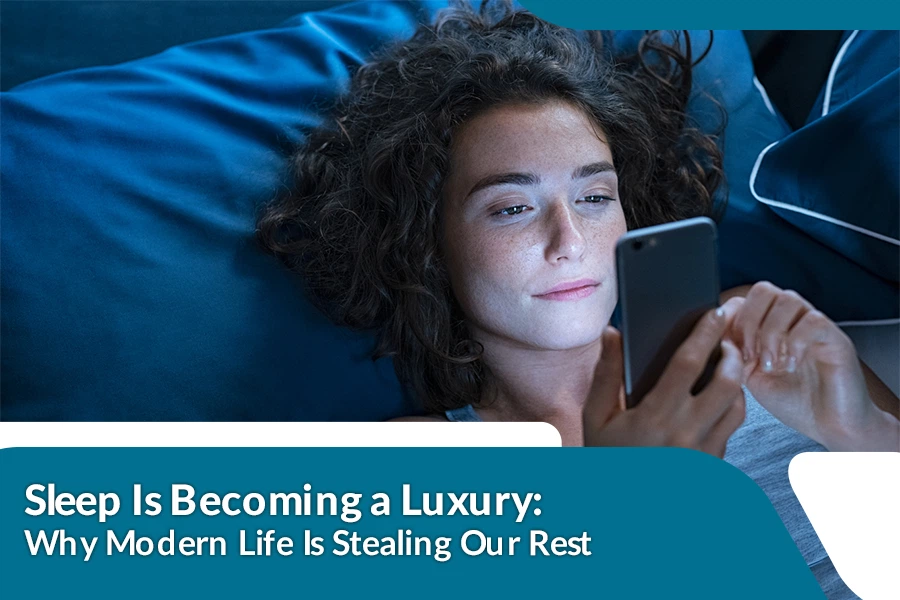
In today’s fast-paced world, sleep is not just a necessity but a luxury. Being busy used to be something that people were proud of. Sleeping late, waking up early and running on little sleep were seen as signs of hard work and success. With high-demanding jobs, digital distractions and high-stress lifestyles, achieving restful sleep has become an aspiration for many.Â
Luxury is often associated with material wealth, but it is something beyond the materialistic things-it includes experiences, well being and self care. Sleep is one of the most important yet most neglected luxuries of modern life. This article breaks down how sleep is becoming a luxury, modern sleep crisis, healthy sleep habits, etc.

Why is everyone suddenly this tired?
I keep going back and forth on whether this is actually new or if we just talk about it more now because of the internet. Maybe our grandparents were exhausted too and just didn’t have a phone to complain on at 2 am. But also and I think this part is real – work doesn’t really stop anymore. An email pings at 11 pm. A slack notification shows up on a Sunday afternoon for no good reason. The line between “work mode” and “rest mode” used to be an actual door you walked through and closed. Now it’s a six-inch screen sitting on your chest at midnight. So yes, sleep becoming a luxury kind of makes sense once you look at it that way, even though it sounds a little dramatic to say out loud.
Best Sellers
-
Modavinil 200mg (Modafinil)
$69.00 – $449.00Price range: $69.00 through $449.00Shop Now This product has multiple variants. The options may be chosen on the product page -
Modafil Md 200 mg (Modafinil)
$70.00 – $749.00Price range: $70.00 through $749.00Shop Now This product has multiple variants. The options may be chosen on the product page -
Modvigil 200mg (Modafinil)
$69.00 – $449.00Price range: $69.00 through $449.00Shop Now This product has multiple variants. The options may be chosen on the product page -
Vilafinil 200 mg (Modafinil)
$69.00 – $449.00Price range: $69.00 through $449.00Shop Now This product has multiple variants. The options may be chosen on the product page -
Modafresh 200 mg (Modafinil)
$69.00 – $449.00Price range: $69.00 through $449.00Shop Now This product has multiple variants. The options may be chosen on the product page -
Modvigil MD 200 mg (Modafinil)
$69.00 – $395.00Price range: $69.00 through $395.00Shop Now This product has multiple variants. The options may be chosen on the product page
That 1 am scroll everybody pretends they don't do
So you’re lying there, eyes a bit heavy, telling yourself “five more minutes” on the phone. Five minutes turns into forty-five. This is not a rare experience – everyone does this, which honestly makes it kind of funny in a sad way. Screens before bed mess with your melatonin, that’s old news, physicians have said it a hundred times, but knowing the fact never stops anyone from doing it anyway.Â
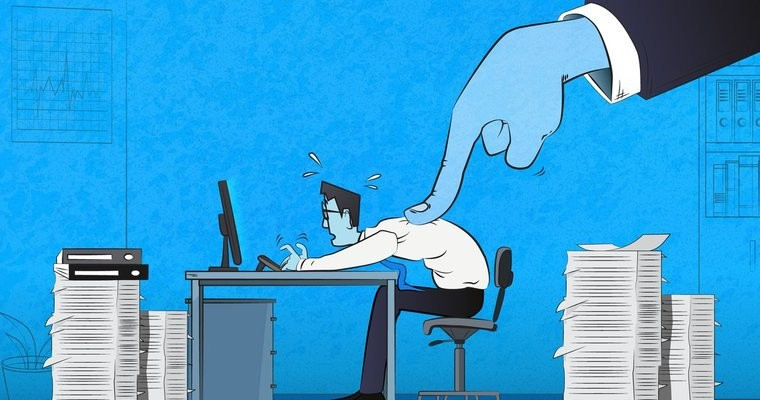
There’s also this thing where being busy turned into a badge of honor somewhere along the way. “I only slept four hours” used to sound like a warning sign you should take seriously. Now it sometimes sounds like a flex. Strange how that happened. Sleep becoming luxury isn’t only about not having enough time-it’s also about not valuing the time even when you technically have it sitting right there.

When rest turned into something you have to earn
This is the part that bugs me the most, if I’m being honest. Somewhere along the way, rest stopped being a basic thing your body needs and turned into something you “deserve” only after proving you worked hard enough for it. Like sleep is a reward instead of a requirement. That feels backwards, right? But try telling that to anyone juggling two jobs, or a newborn, or finishing a degree while working full time. For a lot of people, sleep becoming luxury isn’t a metaphor at all-it’s literally what their week looks like. There just isn’t room for it unless something else gets cut first.
And here’s a contradiction I haven’t fully sorted out in my own head: even people who do have plenty of time still don’t sleep well. So it’s not purely a time problem. It’s something messier than that, tangled up with stress and habits and maybe just not knowing how to switch your brain off anymore.
What actually happens in your body when this keeps going?
Cutting sleep short again and again does stuff to you that isn’t obvious on day one. Memory gets foggy. Reaction time drops to the point where certain tests show drowsy driving which is close to drunk driving. Mood swings happen more often for no clear reason. Cravings for sugar and junk food go up because your hormones get thrown off when you’re running on empty for too long. Sleep deprivation has this sneaky way of making itself feel normal after a while, like your baseline just quietly resets lower, and you don’t even notice how foggy you’ve become until you accidentally get one genuinely good night and feel almost shockingly clear-headed, like “oh right, this is what a brain is supposed to feel like.”
All these sleep loss effects tend to pile up quietly too, which is maybe part of why people don’t take them seriously until something snaps-a close call while driving, a health scare, something that finally makes it feel real instead of just theoretical. There’s a whole list of physical stuff layered underneath as well, the immune system taking a hit, blood pressure creeping up, the heart working harder than it really should have to. I’m not a physician, I just read this stuff and it sticks with me because it’s scary in a quiet way, not a scream-from-the-rooftops kind of way.
It’s not just feeling tired, it shows up in dumb little ways
Forgetting why you walked into a room. Reading the same sentence four times without it landing. Snapping at someone over something tiny that didn’t deserve it. These are honestly some of the more common lack of sleep symptoms, and most people don’t connect the dots back to sleep at all-they blame stress, or “just a bad day,” or being absent-minded like it’s a personality trait instead of, you know, a sleep thing.
I think a lot of poor sleep quality goes unnoticed for exactly this reason, because people assume sleep is binary-either you slept or you didn’t. But quality matters just as much as hours, maybe more honestly. You can technically be in bed for eight hours and still wake up wrecked if you were tossing around half the night, or your room was too warm, or you woke up three or four times without even remembering it the next morning.
Money, time and why do some people just sleep better?
Having money buys you better sleep. A decent mattress isn’t cheap. A quiet apartment away from traffic noise isn’t cheap either. Not having to work a second job so you can actually go to bed at a reasonable hour also isn’t something everyone gets to choose. So when people talk about sleep becoming a luxury, sometimes they mean it almost literally, in the dollar-sign sense, not just the nice-to-have sense.
Meanwhile, work and sleep balance keeps getting tossed around in wellness articles like it’s some easy switch you flip whenever you feel like it. But for people working night shifts, or multiple jobs, or caregiving on top of a regular 9 to 5, there isn’t really a balance to find. There’s just less bad and more bad, and you pick whichever one you can survive that week.
Is this actually a new problem or did we just start naming it?
Honestly? Probably both, annoyingly. I think the phrase modern sleep crisis gets thrown around a lot lately partly because we finally have data-sleep trackers, wearables, apps handing you a “sleep score” every single morning like a report card nobody asked for. So we’re simply more aware now. But also, genuinely, things have shifted. Round-the-clock connectivity wasn’t really a thing thirty years ago. Shift work has always existed, sure, but now even people with regular nine-to-five jobs are answering emails at all hours because the boundaries quietly dissolved somewhere along the way.
I keep flip-flopping on this one. Sometimes I think sleep becoming a luxury is a bit overstated, like maybe people just need to put the phone down already. Other times I think no, it’s structural-it’s about how cities get built, how commutes eat up hours nobody gets back, how shift schedules don’t match how human bodies actually work. Probably it’s both things happening at once, which isn’t a satisfying answer but it’s the honest one I’ve landed on.
Productivity culture made this worse
There’s this lingering assumption that sacrificing sleep gets you ahead somehow. Wake up at 5 am, grind, hustle, all that familiar stuff. But sleep and productivity are actually tied together way more closely than hustle culture wants to admit-tired brains make worse decisions, slower decisions, more little mistakes that need fixing later, which eats up more time than the missed sleep would have saved in the first place. The math genuinely doesn’t work out the way people assume it does. Yet the myth keeps going because in the short term, pulling an all-nighter feels productive in the moment, even when it really isn’t.
Little things that maybe help, no guarantees though
I’m hesitant to drop a tidy list here because what works really is different for everyone, and I don’t love when articles pretend there’s one universal fix that solves it for all of us. But some healthy sleep habits that keep getting repeated by people who actually study this stuff, not just wellness influencers selling supplements-keeping a fairly consistent wake-up time even on weekends, getting real daylight in the morning instead of staying inside, not eating a huge meal right before bed, cutting caffeine earlier than you probably think you need to. None of this is groundbreaking. None of it magically fixes everything either. There are some medications that help with sleep and they are called wakefulness promoting medications like narcolepsy heal 200 mg. They are useful in conditions like narcolepsy, shift work sleep disorder and sleep apnea.Â
Conclusion
Sleep becoming a luxury is one of those phrases that sounds a little exaggerated until you actually sit with it for a minute, until you notice how many people around you are running on fumes and just calling it normal at this point. Maybe the fix isn’t one big sweeping thing. Maybe it’s just paying closer attention to your own sleep health instead of treating it as the first thing you cut whenever life gets busy and something has to go.
Sleep becoming a luxury isn’t really about luxury hotels or expensive mattresses, although sure, that helps a little. It’s about something more basic getting harder to protect-actual rest, actual quiet, actual permission to just stop for a while. And until that becomes less rare, more people are going to keep saying “I’m fine” with that same tired little shrug, even when it’s pretty obvious they’re not.
FAQs
1. Is sleep really becoming a luxury or does it just feel that way?Â
More people genuinely have less consistent sleep now, but it’s also talked about and tracked so much more that it feels more dramatic too.
2. How many hours of sleep do most people actually need?Â
Most adults need somewhere around 7 to 9 hours, though it varies a bit from person to person and even night to night.
3. Can you catch up on lost sleep over the weekend?Â
Not really, not fully anyway. It helps a little but it doesn’t undo whatever damage built up during a rough week.
4. What’s the fastest way to start sleeping better?Â
There isn’t really a fast fix, but keeping a consistent wake-up time tends to help more than most people expect it to.