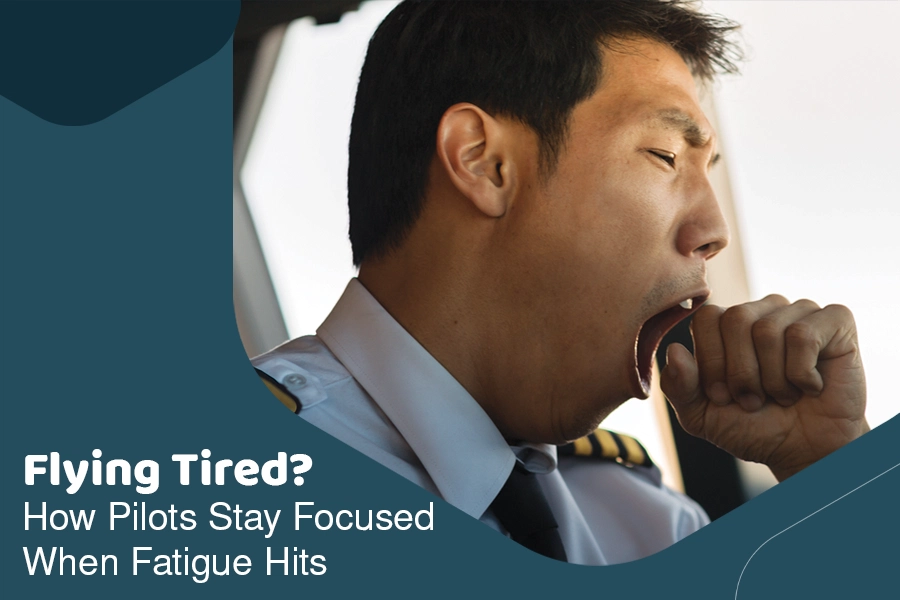
Long-haul and overnight flights are particularly challenging, as they often require pilots to remain alert during the body’s natural sleep window.
How common is fatigue in Aviation?
Fatigue is widespread in the Aviation industry. Crew weariness is to blame for between 15–20% of commercial aircraft accidents. This can happen when people don’t get enough sleep, their circadian rhythms are thrown off, or they don’t get enough relaxation. Surveys consistently show that a large proportion of pilots operate while fatigued:
- A poll by the European Cockpit Association indicated that more than half of pilots have accidentally fallen asleep on the flight deck at least once.
- The FAA has said several times that weariness is a component in accidents where monitoring fails, communication breaks down, and decisions are made incorrectly.
- The National Transportation Safety Board (NTSB) says that tiredness is a “major human performance hazard” and has been connected to many incidents.
These findings highlight why pilot fatigue management is a cornerstone of modern aviation safety.
Pilot Fatigue Management
Pilot Fatigue management refers to the methods by which Service Providers and operational personnel address the safety implications of fatigue. Modern aviation takes fatigue seriously. Pilot fatigue management is built into airline operations through structured programs and regulations designed to protect both pilots and passengers.
Individual Strategies are:
- Naps: Taking naps before a long flight is highly recommended.
- Sleep hygiene: Maintaining a proper sleep schedule when not flying is appreciated.
- Nutrition: Having a healthy meal while avoiding caffeine and sugar to avoid crashes.
- Hydration: Make sure that you drink enough water
- Cock-pit Napping
Few of the In-flight Strategies are:
- A forty-minute nap after a long period of wakefulness can be extremely beneficial. According to a study, pilots who took a forty-minute nap were much more alert during the last 90 minutes of the flight and they also responded better on the psychomotor vigilance test (PVT) showing faster response rates and fewer lapses. The control group who had not taken a nap showed lapses during the approach and landing phases of the flight. In-seat cockpit napping is a pilot fatigue management tool.
- Activity breaks are another measure found to be most beneficial when a pilot is experiencing partial sleep loss or high levels of fatigue. High fatigue coincides with the circadian trough where the human body experiences its lowest body temperature. Studies demonstrated that sleepiness was significantly higher for fatigued pilots who had not taken any walking breaks.
- Bunk sleeping is another effective in-flight strategy. Based on the time zone pilot’s take-off from, they can determine which times during the flight they will feel inadvertently drowsy. Humans usually feel drowsier mid-morning and then mid-afternoon.
- Fatigue Risk Management Systems (FRMS): Data-driven processes used by operators to continuously monitor and manage fatigue-related safety risks.
- Inflight-rostering or relief involves assigning the crew to specific tasks at specific times during the flight so that other members of the crew have time for activity breaks and bunk sleep. This allows well-rested crew members to be used during the critical phases of flight
- Proper cockpit lighting is paramount in reducing fatigue since it inhibits the production of melatonin. Studies have shown that simply increasing lighting level to 100-200 lux improves alertness in the cockpit. However, such lights can affect the night vision.
- Flight Time Limitations (FTL): Stringent regulations, such as minimum 48-hour rest periods are designed to limit excessive duty hours and combat cumulative fatigue.
Other strategies include:
- Although pilots are often given layovers with ample time to rest, the environment itself may not be favourable to achieve full recovery. The temperature may be too warm, a noisy place or the time zone change may not facilitate biological sleep. As a result, the use of over the counter drugs may be effective. Modvigil 200 mg is a well-tested pharmaceutical compound which can be used to initiate sleep to help obtain a good rest. It must not be combined with any cockpit-naps. Consult a healthcare provider for more information.
- Implementation of a personal checklist to rate fatigue before a flight can aid the decision of whether a pilot feels they are fit to fly.
- Implementation of fatigue prediction models, such as the Sleep, Activity, Fatigue, and Task Effectiveness model, optimize scheduling by being able to predict pilot fatigue at any point in time.
- Sleep and fatigue monitoring: Using wrist-worn sleep monitors to track sleep accurately. Traditionally, sleep is tracked through personal estimation which is inaccurate. With this technology, regulators could implement operating restrictions or cautions for pilots with less than eight hours of sleep in the previous 24 hours.
Pharmacological Alertness Aids: A Cautious Discussion
In certain situations, such as disrupted sleep during layovers or severe circadian misalignment-pilots may consult healthcare professionals regarding wakefulness-promoting agents like Modafinil (Modvigil 200 mg). Modafinil (Modvigil 200 mg) has been studied for its effects on alertness and cognitive performance; however, it is not a substitute for sleep and not a routine tool for pilot fatigue management. Its use is strictly regulated, often restricted, and must occur only under medical supervision and airline policy compliance. Importantly, such medications must never be used to extend duty limits or combined with cockpit napping. Aviation safety frameworks continue to prioritize rest, scheduling optimization, and FRMS over pharmacological approaches.
What Passengers Should Know
Passengers can take comfort in knowing that aviation is built on layers of fatigue protection. Pilots are trained to stay alert during long flights and report when they are unfit to fly, airlines are required to support fatigue reporting without punishment, and no pilot operates alone. When fatigue arises, systems not individual endurance keeps flights safe.
Final Thoughts
Flying tired may sound unsettling, but the reality is reassuring. Pilot fatigue management is a big part of the culture of safety in aviation. Pilots control weariness so that passengers may safely travel across continents, through nights, and throughout time zones and staying alert during such times is integral. They do this by following stringent rules, using scientific scheduling, modern monitoring systems, and professional discipline.
People can be pilots, but aviation is set up so that weariness never goes unchecked.
FAQs
- What is FRMS?
Fatigue Risk Management Systems (FRMS) are data-driven programs that help airlines predict, monitor, and manage pilot fatigue. - Can pilots refuse to fly if they are fatigued?
Yes, pilots are encouraged to report fatigue and remove themselves from duty without punishment. - Should passengers worry about pilot fatigue?
No, aviation safety systems ensure that fatigue is managed through multiple protective layers, not individual endurance. - Are pilots allowed to nap during flights?
Yes, controlled cockpit napping is permitted on certain long-haul flights under strict procedures. - Why is pilot fatigue dangerous?
It increases the risk of slower reaction times, poor decision-making, and communication errors in the cockpit.