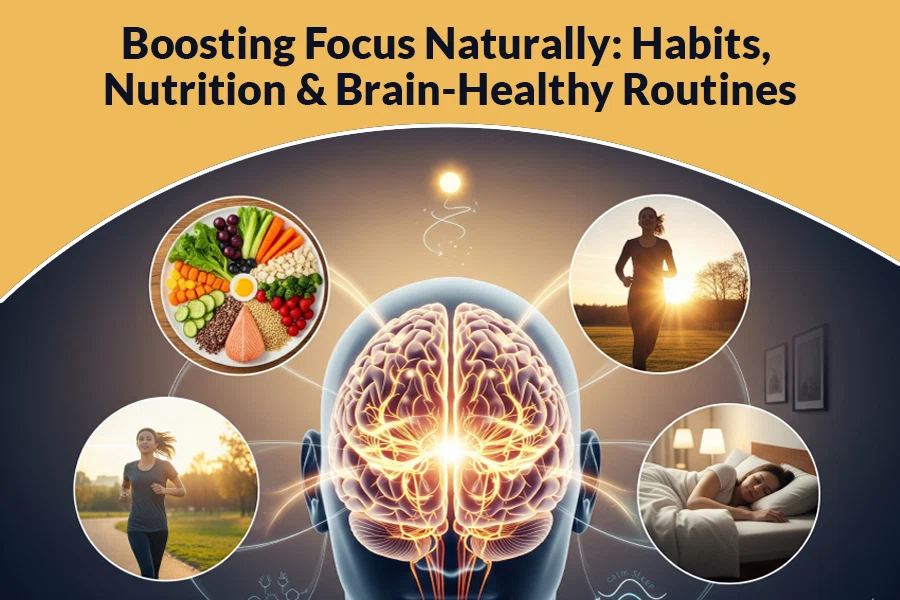
Exercise is one of the most reliable natural ways to boost focus. Aerobic activities (brisk walking, jogging, cycling) increase cerebral blood flow and raise levels of brain-derived neurotrophic factor (BDNF), which supports learning and executive function. Resistance training improves executive control and working memory, too. Even short bouts of activity, 10–20 minutes, boost alertness and concentration for the following hours. Meta-analyses show meaningful improvements in cognitive function with regular exercise.
How to use movement for focus:
- Do a 20-minute walk before a demanding task to prime attention.
- Use micro-breaks: stand, stretch, or do 2–5 minutes of bodyweight movement every 60–90 minutes.
- Combine aerobic + resistance training across the week (e.g., 3 cardio sessions + 2 strength sessions).
This mix supports both immediate alertness and long-term cognitive resilience.
3. Eat for clarity: meals and nutrients that support attention
There’s no single “brain food,” but dietary patterns matter. Diets rich in vegetables, fruits, whole grains, legumes, healthy fats (especially olive oil and omega-3s from fish), and lean proteins consistently correlate with better cognition and lower risk of cognitive decline. Conversely, diets high in processed foods, added sugars, and saturated fats are linked to worse attention and memory. Think Mediterranean-style eating when you plan for sustained mental clarity.
Key nutrients and how to get them:
- Omega-3 fatty acids (DHA/EPA): important for neuron membranes and signaling. Populations or individuals low in DHA may see modest improvements in memory and reaction time from supplementation or eating oily fish (salmon, mackerel, sardines).
- Protein + tyrosine-rich foods: eggs, poultry, dairy, beans, amino acids like tyrosine are precursors for dopamine and norepinephrine, neurotransmitters that support focus.
- Micronutrients: B vitamins (B6, B12, folate), iron (particularly for women and anyone with a deficiency), magnesium, and vitamin D are foundational. Test and correct deficiencies with a clinician.
- Hydration: Even mild dehydration reduces alertness; drink water throughout the day.
Aim for regular meals that combine protein, fiber, and healthy fats to avoid blood-sugar dips and post-meal sleepiness.
4. Supplements that may help
Supplements are neither magic nor necessary for everyone. Still, evidence supports a few options in specific contexts:
- Omega-3 (DHA/EPA): modest cognitive benefits shown in multiple reviews, especially when baseline intake is low.
- Caffeine (+ L-theanine): caffeine reliably improves alertness; pairing with L-theanine (an amino acid in tea) can smooth jitteriness and boost focused attention in the short term. Use responsibly and avoid late doses near bedtime.
- Creatine: short-term studies suggest creatine supplementation can improve working memory and reasoning during sleep deprivation or mental fatigue in some people.
Before starting supplements, check with a healthcare provider, especially if you take medications or have health conditions. Evidence quality varies, and dosing matters.
5. Train attention: habits and mental practices
Attention is a skill that responds well to training. These practices train brain networks that support sustained attention and task-switching:
- Focused sessions + deliberate breaks (Pomodoro): work 25–50 minutes, break 5–10 minutes. It reduces mental fatigue and prevents rumination.
- Mindfulness meditation: short daily sessions (10–20 minutes) of focused-breath or open-monitoring practice improve attention and reduce reactivity. Clinical neuroscience shows changes in attentional control networks with regular practice.
- Cognitive variety: rotate tasks to avoid monotony; switching between demanding and easier tasks helps maintain engagement.
- Practice “single-tasking”: reduce multitasking, turn off non-essential notifications, and batch similar tasks to minimize context-switching costs.
6. Environment design: make your space work for you
Your environment determines how often you get distracted. Shape it intentionally:
- Declutter the immediate workspace; hide your phone or use do-not-disturb during focus blocks.
- Lighting matters: daylight or bright artificial light improves alertness and mood.
- Sound: Some people work best with quiet, others with ambient noise or music without lyrics. Use what consistently helps you enter flow.
- Visual anchors: keep a single notepad or task app visible with the current priority, it reduces decision fatigue about what to do next.
7. Quick, deployable focus hacks
Short on time? Try these evidence-backed micro-tools:
- 20-minute brisk walk (increases arousal and attention).
- Caffeine timed to your work window (avoid late dosing).
- Controlled breathing (4-4-6 or box breathing) to reduce stress and regain focus.
- One-minute journaling: write the single most important next step, reduces task anxiety and increases clarity.
- Cold splash on the face or a few seconds of cold water: instant alerting effect for many people.
8. Common mistakes and how to avoid them
- Relying on willpower for long periods: willpower is finite; design systems instead (timers, scheduled breaks, environmental controls).
- Chasing “productivity hacks” without sleep and nutrition: shortcuts fail if the basics are missing.
- Overdoing stimulants: excess caffeine or untested supplements can worsen sleep and attention long-term.
Mixing too many changes at once: pick 1–2 habits to adopt for 4 weeks (sleep schedule, morning walk, protein breakfast) and iterate.