What Is Analysis Paralysis and How Can You Make Decisions More Easily?
By
Dr.Liam
/ November 3, 2026
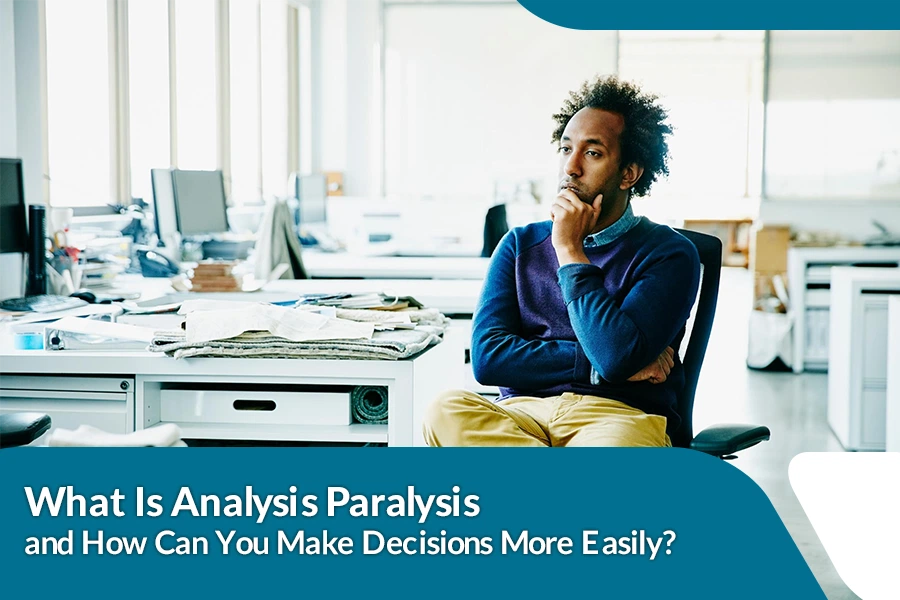
Have you ever opened a food delivery app with the intention of ordering out, only to spend like 40 minutes comparing all your options and then wanted to get nothing in the end? Or sat down to watch something on Netflix and took so long to decide that you just went to sleep? If you have, then you’re not alone, and this is honestly such a universal experience at this point.
It’s like thinking so much about something gets in the way of actually doing something about it. This same behavior pattern can show up when a person is choosing their career, getting a new offer, or even accepting a job offer.
This decision fatigue happens when individuals spend so much time examining all the different possibilities in their search for the perfect answer that even making a minor decision becomes difficult for them. Most of us may think that looking more into it can’t hurt anyone and could actually be insightful, but it can sometimes only bring with it more exhaustion and even lesser clarity than before. We try to break this concept down in the blog and try to help you out with your decision-making if you find yourself stuck in this loop as well.
Related: 8 Signs of Decision Fatigue and How To Cope
What is Analysis Paralysis And Why Does it Happen?
It’s a state where an individual’s excessive thinking over something actually ends up preventing them from making a decision. You might look at decision fatigue and think that’s the next buzzword of the internet, but it’s a tale as old as time. Just look at Shakespeare’s Hamlet, for example, he was plagued by overthinking almost throughout the play, and we see him in a constant state of analysis paralysis.
Unfortunately, there is no single cause for this phenomenon. Sometimes, you could be experiencing this stalling in your decision-making because the situation genuinely has some complicated outcomes. Sometimes, it could be due to a certain perfectionism, lack of clarity, or uncertainty that might come with the task. And after all, it is true that having too many options can make them look too similar and make it difficult to choose.
Psychologist Barry Schwartz wrote about this years ago in his book on the paradox of choice. More options sound like freedom, and up to a point it is. Past that point, every extra option becomes one more thing to weigh, one more thing to feel bad about skipping.
A few things tend to feed it. If there are high stakes to the choices, or what only feels like high stakes. A big pile of conflicting advice. Being tired. And a quiet belief that there’s one right answer hiding somewhere, if only enough digging gets done.
There isn’t usually one right answer to it. Usually there are three or four perfectly okay answers, and some people can’t stand the idea of picking the slightly worse one.
Sometimes the brain is just swamped. Cognitive overload is a real thing, where information arrives faster than it can be sorted, and the sorting part basically quits. A person can read the same spec sheet three times and absorb nothing at all. Analysis paralysis isn’t laziness either but is usually the opposite. Somebody caring too much and working very hard on the wrong part of the problem.
How Does Overthinking Affect Decision-Making and Mental Health?
Overthinking is not a good mix for decision-making. At first it may look like diligence. Just another hour of research or another list. But after a certain point the thinking stops producing anything new. It just loops. Same pros, same cons, same worry, slightly different wording.
That loop is tiring. Mentally and physically too, since a mind running in circles doesn’t switch off easily at night. An individual’s sleep gets thinner, patience gets shorter, and small choices start to feel heavier than they have any right to be.
Then there’s decision fatigue. Every choice, even a trivial one, draws from the same limited pool of mental energy, so by late afternoon a person who’s been weighing options all day can end up making worse calls, or worse, no calls. Ordering takeout turns into a whole project.
There’s a mood aspect to it as well. Putting things off tends to bring guilt, guilt tends to bring more spiraling, and the spiral makes the next choice harder. It all ends up going round and round. Some people start avoiding decisions altogether and hand them to a partner, a friend, or a coin flip.
Related: Hidden Link Between Mood And Mental Sharpness
Due to this stalling, the person may feel a low hum of tension that never quite leaves and a feeling of being behind on things that haven’t even started yet. That’s how analysis paralysis does most of its damage, really. Not in one big moment but through lots of small delays that quietly pile up.
Fear of Making the Wrong Choice Can Make Decisions Harder
The fear of making the wrong choice can start making every other option look like a possible mistake just waiting to happen.
Strip away the spreadsheets and the research, and underneath there’s often a pretty simple worry. What if this turns out wrong? What if it costs too much, wastes time, or looks bad? What if somebody says, “Told you so”?
That’s fear of failure wearing a very practical outfit. It rarely announces itself. It says things like “just one more review” or “let me sleep on it,” which sounds sensible to most people.
Not deciding feels safer. That’s the trick to it. As long as nothing has been picked, nothing can be wrong yet. The choice stays hypothetical, and so does the risk of failure or success. Except it isn’t actually safe. But waiting comes at a price, too, of missed deadlines, missed chances, and the constant feeling of being stuck.
Another thing that people tend to overestimate is the permanence of their choices. A lot of decisions can be undone, adjusted, or at least learned from. Returning a jacket isn’t a tragedy. Changing a plan on a Tuesday isn’t one either. Big choices are different, sure. A job offer, a move across the country. Those deserve real thought. But even then, there’s usually a point where more thinking stops helping and starts hurting.
How Can You Overcome Analysis Paralysis?
There’s no magic treat to it, but there are a few things that can help. Shrink the options first since fewer choices means less to weigh. Three is plenty for most things. If there are fifteen, cut twelve using one quick rule, price or location or whatever matters most, and don’t look back at them.
Set a deadline for yourself, even a rough one is fine. Ten minutes for lunch, two days for the new laptop. Research expands to fill whatever time it’s given, so a time limit quietly forces it to stop.
Then there’s the “good enough” idea. Economist Herbert Simon called it satisficing, which just means taking the first option that meets the basic requirements instead of hunting for the best one possible. It sounds lazy, but it isn’t. People who choose this way tend to feel less regret afterward, because there’s no endless comparing going on in the background.
Knowing how to decide often starts with knowing what matters. Jotting down two or three priorities before looking at any options helps, since otherwise every little detail feels equally important, and it never is.
A bit of critical thinking helps too. Is the choice reversible? How bad is the worst case, really? Would more information actually change the answer? If it wouldn’t, the research is finished. It’s done, and you can close the tabs.
Some people find it easier to treat the whole thing as a small problem-solving task rather than a verdict on their worth as a person. Name the problem, list the realistic options, pick one, and see how it goes. Even breaking down a major decision into smaller pieces helps.
Decision-making skills get better the way most skills do, with practice. Small, low-stakes choices make good training. Pick a movie in two minutes. Order the first thing on the menu that sounds fine. Each quick choice teaches the brain that nothing terrible happens, and over time the grip of analysis paralysis loosens a little.
When Can Decision Paralysis Become a Sign of a Deeper Problem?
Most of the time it’s a bad habit or a bad week and nothing more.
But sometimes it’s more than that. If almost every choice feels impossible, including tiny ones, and it’s been that way for months, something else may be going on. Anxiety, perfectionism that’s gotten out of hand, ADHD, depression, or any kind of past trauma can all make decision-making an unusually heavy task that you cannot seem to complete.
Some signs can point to a deeper issue. Losing sleep over minor choices. Avoiding responsibilities because deciding feels unbearable. A racing heart or stomach trouble whenever a decision is coming up. Leaning on other people for nearly everything, even things that used to be easy.
None of that means something is wrong with the person. It means the pattern has outgrown the usual tricks. When analysis paralysis shows up constantly and keeps getting worse despite real effort, a physician, a therapist, or counselor can help figure out what’s underneath. Approaches like cognitive behavioral therapy are commonly used for anxiety-driven avoidance and indecision. Asking for help isn’t a failure. It’s just another decision, and a pretty good one. And the dinner place? Pick one. It’s probably fine.
Related: Decision Paralysis: The Hidden Cost of Having Too Many Choices
FAQs
1. Is analysis paralysis a mental illness?
No, it’s a thinking pattern, not a diagnosis. It can overlap with anxiety, though.
2. Why is it difficult for certain people to make decisions?
Stuff like perfectionism, anxiety, regrets, and high pressure environments all play a part. An individual’s personality matters too.
3. How long should a decision take?
Depends on the stakes. Small ones deserve minutes, bigger ones a few days, and rarely longer than that.
4. Can too many options really make things worse?
Yes. Past a certain point, more choices tend to bring more doubt and less satisfaction.
5. When should someone ask for help?
When your decision fatigue starts interfering with your sleep, work, or relationship for weeks, then you could start by talking to a therapist or a professional whom you trust.