Modamindfuels

0
Your Cart

No products in the cart.

No products in the cart.

Remove All Items

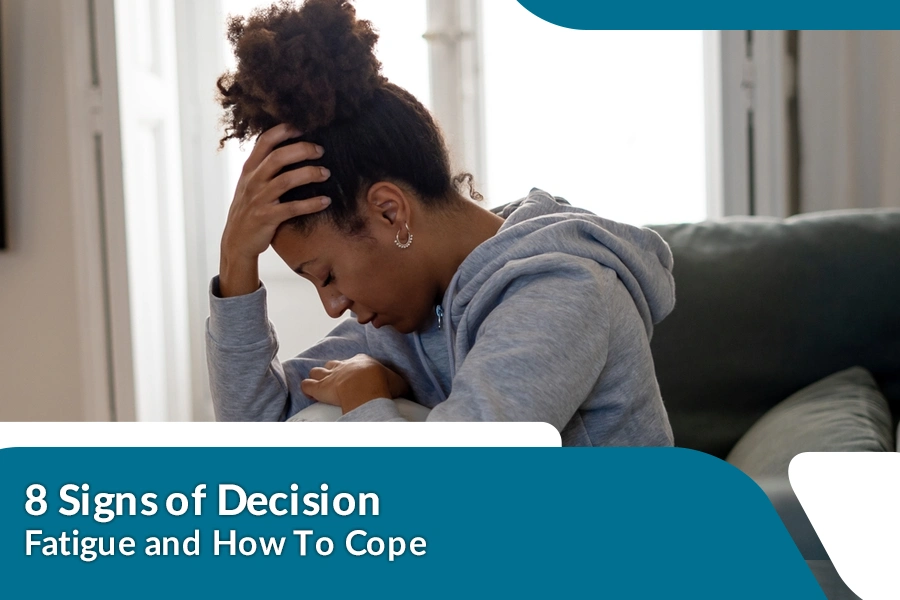
8 Signs of Decision Fatigue and How To Cope 

Most people think fatigue just means physical tiredness – like after a workout or a bad night’s sleep. But mental fatigue works differently. It builds up quietly, decision by decision, and often you don’t notice it building until it’s already too late and you’re standing in front of the fridge for ten minutes not knowing what you want.

Fatigue, in the decision-making sense, isn’t about energy levels exactly. It’s more about how much mental bandwidth got used up already that day. Answering emails, choosing an outfit, deciding what to cook, replying to texts, picking a Netflix show – all of that adds up, even if none of it feels “hard” on its own.

What is decision fatigue?

Most people think fatigue just means physical tiredness – like after a workout or a bad night’s sleep. But mental fatigue works differently. It builds up quietly, decision by decision, and often you don’t notice it building until it’s already too late and you’re standing in front of the fridge for ten minutes not knowing what you want.

Fatigue, in the decision-making sense, isn’t about energy levels exactly. It’s more about how much mental bandwidth got used up already that day. Answering emails, choosing an outfit, deciding what to cook, replying to texts, picking a Netflix show – all of that adds up, even if none of it feels “hard” on its own.

Sign 1: You start avoiding tiny decisions

Suddenly you’re letting someone else pick the restaurant, not because you don’t care, but because picking feels like effort you don’t have left. Even small stuff – should I text back now or later – starts getting pushed off.

It’s not procrastination exactly. It’s more like your brain quietly going “nope, not this one too.”

Sign 2: Everything seems equally important suddenly

Your brain has a tendency to sort out decisions on the basis of its size. Big ones get more attention, small ones get almost none. But with decision fatigue, that sorting system kind of breaks down. Picking a font for a work doc can suddenly feel just as draining as picking a job offer. Which obviously doesn’t make sense, but fatigue doesn’t really care about logic.

Sign 3: You keep going with the easy option, even when you know it's not the best one

This is one of those signs of decision fatigue people notice in hindsight, not in the moment. Ordering the same food again. Wearing the same outfit combo. Picking the first option instead of comparing. Not because it’s the best choice, just because comparing takes energy nobody has left.

Sign 4: Small choices start feeling heavier than the big ones

Weirdly, this happens a lot. Choosing between two similar emails to reply to first can feel worse than deciding something actually important. Maybe it’s because big decisions get planned around and small ones sneak in constantly, one after another, with zero breaks in between.

Sign 5: Irritability over basically nothing

Someone asks “what do you want for lunch” and it feels like they just asked you to solve a math problem. That snappy, slightly annoyed reaction isn’t really about the person asking – it’s the fatigue talking. This one’s easy to misread as a mood thing when really it’s just mental exhaustion wearing a mood costume.

Sign 6: Stuff that used to take two seconds now takes forever

Replying to a simple text. Picking a show. Choosing a coffee order. These things shouldn’t require deliberation, yet somehow they do now. This is one of the clearer signs of decision fatigue, honestly, because it’s so noticeable once you catch it happening.

Sign 7: Instant regret after making a decision

Right after choosing something small, there’s this nagging “wait, should I have picked the other one” feeling. Not because the choice was actually wrong, just because there wasn’t enough mental energy to feel confident about it in the first place.

Sign 8: Physical tiredness that has nothing to do with sleep

This is the confusing one. You slept fine. Nothing physically demanding happened. But by evening you’re wiped out anyway. That’s mental fatigue disguising itself as physical fatigue, and it throws people off because they assume tiredness always means “body,” not “brain.”

Causes of fatigue

There isn’t just one cause, which is honestly annoying because a single cause would be easier to fix. Too many choices packed into one day. Constant notifications asking for micro-decisions. Multitasking, which splits attention way more than people realize. Even unresolved stress from something unrelated can drain the same mental reserve used for decision-making. It’s not always obvious which one is doing the damage on a given day; sometimes it’s all of them stacked together.

How do you cope with decision fatigue 

There’s no perfect fix, and honestly anyone claiming there is one is probably overselling it. But a few things do help take the edge off. Reducing the number of decisions during the day is one of the more effective ones – not eliminating choices, just trimming the unnecessary ones. Same breakfast most days. Outfits picked the night before. Fewer notifications interrupting focus. None of this sounds exciting, but it works because it protects the mental reserve for stuff that actually matters later.

Another thing that helps, oddly, is making the harder decisions earlier in the day when there’s more mental fuel left. Waiting until evening to make an important call is basically setting yourself up to make a worse one.

Building some kind of daily routine 

Routines get a bad reputation for being boring, but the real value is that they remove decisions entirely. If breakfast is already decided, that’s one less thing draining the tank. If the morning follows roughly the same order each day, there’s less negotiating with yourself before 9 am.

It doesn’t have to be a rigid, color-coded routine either. Even a loose one – wake up, do this first, do that next – takes pressure off. The goal with building daily routines isn’t perfection, it’s just fewer active choices clogging things up.

A few things to reduce daily stress 

Batching similar tasks together helps more than people expect. Answering all messages at once instead of constantly switching between things. Keeping choices limited on purpose – like only two options for lunch instead of ten. Taking actual breaks between decisions instead of chaining them back to back.

None of this eliminates decision fatigue completely. It still creeps back on hard weeks, on stressful days, on days when everything feels like too much at once. But these small adjustments do soften how hard it hits.

Final Thought 

Some days the brain just has less to give, and there isn’t always a clean reason why. Fighting that instead of working around it usually just makes the fatigue worse. Recognizing the signs of decision fatigue early before it turns into full-on burnout or constant irritability makes coping with it a lot more manageable.

FAQs

1. Is decision fatigue the same as being lazy? 

No, it’s not lack of motivation; it’s lack of mental energy. 

2. What is decision fatigue? 

Decision fatigue is mental and emotional exhaustion that makes it difficult to make too many choices, big or small, over a period of time. 

3. How long does decision fatigue usually last? 

It varies, sometimes it lasts a few hours, sometimes it builds across a whole stressful week.

4. Can routines actually help reduce decision fatigue? 

Yes, because routines remove repeated small decisions from the day.

5. Is decision fatigue linked to stress in general? 

Yes. High stress days tend to burn through decision making energy faster.

Shopping Cart
Scroll to Top