No products in the cart.
No products in the cart.
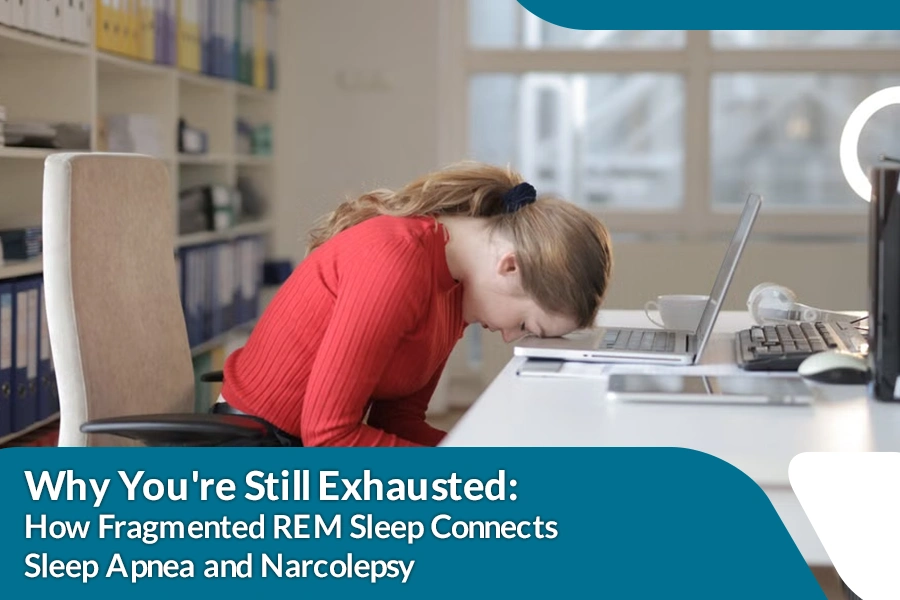
Imagine that you have an important meeting the next day, so you plan to sleep well. However, when you wake up the next day, it feels like you were up working or answering calls rather than actually sleeping. You end up hitting snooze quite a few times when your alarm rings. And you’re reaching for probably your 2nd cup of joe already despite hopping in the shower and trying to freshen yourself up.
It’s a pretty frustrating experience because technically you did get sleep, so why does your body disagree with that? The key might not be the duration of your sleep but what is actually happening in your body from the moment you hit the pillow and drift off. Sleep isn’t one long, uninterrupted state of restoration. You actually move through different stages while you are asleep. One of the stages that you move through when you are asleep is Rapid Eye Movement (REM) sleep. This stage is inherently important for your memory processing, emotion regulation, and cognitive performance.
There are two conditions that can complicate the process of your rapid eye movement and affect your health. Those conditions being sleep apnea and narcolepsy. While they affect your sleep and health in different ways, both can impact your REM.
A night of sleep isn’t one flat stretch of nothing. The brain drifts through lighter stages, then deeper ones, then REM sleep, which is where most of the vivid dreaming happens, and then it loops back around. These sleep cycles repeat four or five times a night, and each pass is meant to do slightly different work.
REM sleep helps with memory and mood and a bunch of other things researchers are still arguing about. It also has one odd feature. The muscles go almost completely limp. Eyes moving, brain busy, body basically switched off. That’s normal. It’s also the detail that ties the two conditions in this post together, more or less.
If something keeps interrupting that stage, the night still looks like a night. Someone is in bed, eyes closed, hours pass. But it doesn’t work the way it should. That’s sleep fragmentation, and it can happen dozens of times an hour without a single memory of it the next morning.
Obstructive sleep apnea (OSA) is the airway partly or fully closing during sleep. Breathing stalls, oxygen dips, and the brain sort of panics and yanks the body awake just enough to restart things. Then it happens again, then again. OSA involves snoring, gasping, and a partner who’s quietly worried. Those are the classic signs. Not everyone gets them, though, and plenty of people with the problem would swear they sleep great.
Here’s where REM sleep matters. Because the muscles relax so much during that stage, the airway collapses more easily. Some people have apnea mostly during REM sleep and look almost fine in the lighter stages. One long case report followed a person for about nine years, and the breathing events during REM were roughly five or six times worse than during the rest of the night.
So the average for the whole night can look not-so-scary. While the one stage that matters most is getting chopped to pieces.
Narcolepsy gets pictured as someone face-down in their soup halfway through dinner. That’s the cartoon. What’s actually happening is closer to a control problem, the brain losing a steady hold on the switch between awake and asleep.
In the type that comes with cataplexy, which is sudden muscle weakness set off by strong emotion like laughing, there’s a loss of the brain cells that make orexin. Orexin, sometimes called hypocretin, helps keep wakefulness stable. Without enough of it, things get wobbly.
And REM sleep starts turning up where it doesn’t belong. Minutes after dropping off for a nap, sometimes. Or in pieces during the day, like sleep paralysis, or dream images creeping in at the edges, or that limp-muscle feeling showing up while fully awake.
Nights are often broken too, and this surprises people. The assumption is that someone who falls asleep easily must sleep like a rock at night. Often not. Nights tend to be choppy, with lots of waking up.
So REM sleep is unstable, waking is unstable, and everything kind of bleeds into everything else.
Researchers have been poking at this. In one group of 190 adults with the condition, about a third of those who also had apnea had the REM-linked kind. That REM-linked type also showed up more often than in matched people without the condition. The authors were careful, though. Bigger studies are needed, so nothing is nailed down.
Related: Narcolepsy: Symptoms, Diagnosis, and Treatment Options
Why would it happen? A few guesses. Choppy sleep might mess with the body’s breathing control. All the switching between sleep and wake might make it harder for the airway to keep up. The extra-limp muscles during REM might make collapse more likely. Probably some mix of all of it. Nobody has fully mapped it. What makes it messy in real life is that each one can hide the other.
In that nine-year case report, the apnea showed up first and seemed to explain the sleepiness. But the picture kept shifting over the years, and eventually the cataplexy pointed somewhere else. Both were there. The reverse can happen too, where someone gets one label and a breathing problem sits underneath, quietly making everything worse.
There’s a testing wrinkle as well. The daytime nap study used to diagnose the condition can be thrown off by untreated apnea and by plain old sleep deprivation, because both can make REM show up early in a nap. Which is why specialists tend to want an overnight study first, plus a stretch of regular sleep beforehand.
Back to the hours-in-bed thing. Sleep quality and sleep length are not the same measurement. A person can log eight hours and still get far less real recovery if the stages that count are being sliced up over and over. Fragmented REM sleep seems to be a big piece of that, though it isn’t the only piece.
Worth separating two feelings, too. Daytime fatigue is low energy, heavy limbs, and foggy thinking. Excessive daytime sleepiness is different, it’s actually struggling to stay awake, nodding off in meetings or at red lights. Both show up in these conditions, and people mix them up constantly. Doctors do ask about the difference.
Related: Understanding Excessive Daytime Sleepiness: Causes, Symptoms & Solutions
Some people also get something that looks like a REM sleep disorder, where the normal limpness fails and dreams get acted out. That’s a separate thing, but it has been spotted alongside the daytime-sleep condition in case reports, so it gets looked at.
None of this is rare enough to ignore. Different sleep disorders can pile on top of each other, and a person doesn’t have to have the textbook version of either to be affected. Untreated sleep apnea in particular can strain the heart and blood pressure over time, which is a good reason not to shrug off the snoring.
If you are experiencing loud snoring with gasping or pauses. Waking with a dry mouth or a headache. Muscles are suddenly giving way when laughing. Waking up unable to move for a few seconds. Falling asleep very fast, at odd times, over and over. Then you should probably visit a medical professional.
You can keep a simple sleep diary for a couple of weeks, even a rough one works. Write down your bedtime, wake time, naps, and how the day felt. Cutting back on alcohol helps a little too, since it tends to make broken sleep worse.
Then an actual sleep study. Home tests exist for the breathing side, and an overnight lab study gives the full picture of REM and everything else. Treatments are pretty different for each condition, which is exactly why getting the right label matters. A CPAP machine does nothing for orexin loss, and nap schedules do nothing for a closing airway.
Still tired after eight hours is worth taking seriously. You obviously shouldn’t instantly panic about it but take it into consideration.
Yes. Studies suggest the overlap is more common than expected, though more research is needed.
No. Snoring alone is common, but snoring with gasping or heavy tiredness deserves a check.
It can contribute. Broken REM sleep means poorer recovery, even when total hours look normal.
Not really. Sleepiness is struggling to stay awake, and fatigue is low energy without necessarily dozing off.
Your sleep apnea may be worse in REM because your brain naturally temporarily paralyses us to stop us from acting out our dreams.

Modamindfuels is a source for detailed information on mental health and its medications, focusing on the treatment of sleep apnea, narcolepsy, and bipolar disorder. The content on this website is intended for general informational purposes only and does not constitute professional medical advice, diagnosis, or treatment. These medications may have side effects, interactions, and contraindications. We do not accept any liability for damages or injuries arising from the use of information or drugs provided on this website.