One Cup, Better Sleep? The Chamomile Question
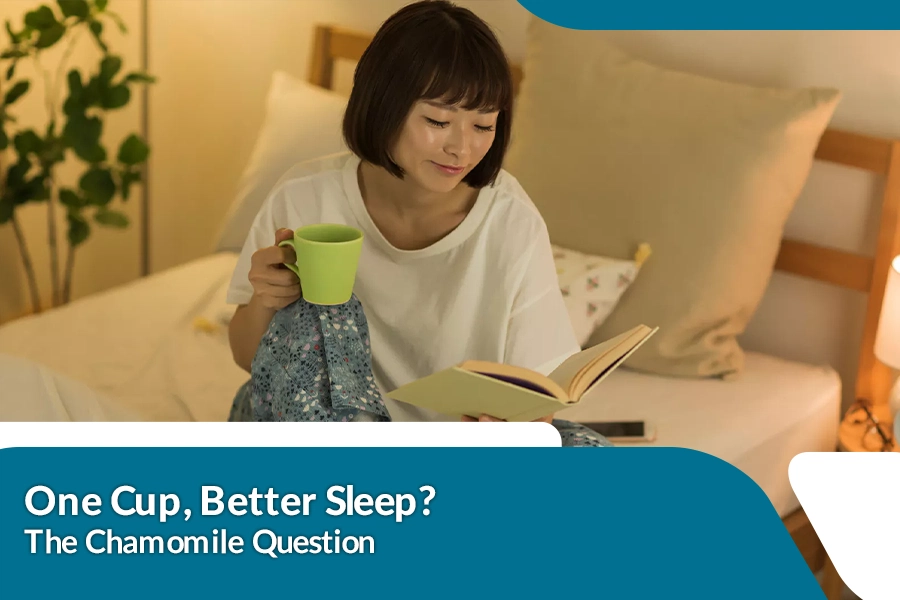
Herbs and plants have been an integral part of the traditional and non-traditional form of medicine dating back to at least 5000 years. The effect of herbal plants has been documented for thousands of years. Similarly, Sleep is a fundamental psychological process that is essential for daily functioning and overall health. What if there is a relationship between sleep and herbs? Sleep and chamomile just go together in people’s minds now, like peanut butter and jelly, except nobody really stops to ask why.
So does chamomile and sleep have an actual relationship, or is it mostly vibes and marketing? Let’s dive into the blog to know the answer for your question.
What is Chamomile?
Chamomile is one of the oldest, most widely and well-documented medicinal plants in the world. It is native to the Old World and is a member of the family of daisy. There are two widely known varieties of Chamomile: German Chamomile (Matricaria chamomilla L.) and Roman Chamomile (Chamaemelum nobile). Most tea blends use German Chamomile. It consists of various bioactive compounds like flavonoids and terpenoids. The important component present is apigenin, a flavonoid that appears to bind to certain receptors in the brain.

The Studies People Keep Citing
There’s a 2011 study that gets referenced constantly where people with generalized anxiety took chamomile extract capsules and reported improvements. Not sleep specifically, more anxiety, but anxiety and sleep are tangled up enough that it gets lumped in anyway.
Then there’s the postpartum study, done on new mothers with sleep quality issues. That one did show some improvement in sleep quality scores after two weeks of chamomile tea, compared to a control group. Worth noting though-this was tea, not concentrated extract, and it was over weeks, not a one-off “drink this and pass out” situation. A nursing home study also comes up a lot, elderly patients, chamomile extract, better reported sleep. Small sample size though. These things almost always have small sample sizes, which nobody likes to mention out loud but it matters.
Chamomile Tea Before Bed-Does Timing Matter?
People ask this a lot, and the answer researchers give is kind of unsatisfying: probably, but nobody’s nailed the exact window. Most of the studies that showed benefit had people drinking it consistently, night after night, rather than as a one-time thing right before lights out. So it might be less “magic bedtime potion” and more “cumulative ritual that also happens to have mild pharmacological backup.”
There’s also the placebo angle, which nobody likes bringing up because it feels like it’s undermining the whole thing. But warm liquid, ritual, dim lighting, telling your brain “okay it’s bedtime now”- that’s a real physiological cue too, separate from whatever apigenin is doing. Some researchers have actually pointed out that the ritual itself might account for a decent chunk of the reported benefit.
Chamomile And Sleep Quality vs Just Falling Asleep Faster

These get conflated constantly and they’re not the same measurement. Sleep latency (how long it takes to fall asleep) is one metric. Sleep quality, which usually gets measured through things like the Pittsburgh Sleep Quality Index (PSQI), is a different, broader thing involving how many times someone wakes up, how rested they feel after.
Most of the chamomile research leans toward quality improvements more than dramatic drops in how fast someone falls asleep. So if someone’s expecting to chug chamomile tea and be fast asleep in eight minutes, that’s probably not what the science is describing. It’s more of a “sleeps a bit better across the night” story than an “instant knockout” one.
What About Just… Drinking More Tea In General
Here’s a tangent worth sitting with for a second. Is it the chamomile, specifically, or is it just the act of drinking a warm caffeine-free beverage before bed that helps? Because chamomile tea is naturally caffeine-free, which already puts it ahead of, say, green tea or black tea as an evening drink. Some of what gets attributed to chamomile might honestly just be “not caffeine,” which sounds almost too simple but probably deserves more credit than it gets.
Not saying that’s the whole story. Just saying it’s a variable that rarely gets isolated in these studies.
The Skeptical Side, Because It Should Be Said
Some researchers remain pretty unconvinced. The effect sizes in a lot of these trials are small, and “small effect size” in research terms often means “statistically there but maybe not something an individual person would actually notice in real life.” That’s a real gap-statistical significance versus something you’d feel.
There’s also the issue of standardization. A cup of store-bought chamomile tea might have wildly different apigenin content compared to a concentrated extract used in a clinical trial. So even if the trials show something, translating that into “grab a Tetley chamomile bag” doesn’t necessarily transfer 1:1.
None of this means chamomile is useless. It means the science is somewhere between “promising” and “not fully settled,” which, honestly, describes most natural sleep remedies if people are being fair about it.

Safety Profile
Chamomile is generally considered safe for most adults, tolerability-wise it’s pretty mild. Some of the following population need to be cautious:
- People with ragweed allergies should be cautious since chamomile’s in the same plant family and cross-reactions do happen sometimes.
- Pregnant individuals are usually told to check with a physician first
- People on blood thinners too, since there’s some interaction potential.
Not medical advice, obviously, just the general shape of what gets said around this topic.
Worth Drinking It Or Not?
Given everything above, chamomile tea for sleep looks like a low-risk, mildly-helpful-for-some-people option rather than a guaranteed fix. If someone already likes the taste and the ritual, there’s little reason to stop, and there’s decent chamomile and sleep research backing at least a modest benefit. If someone’s expecting it to replace an actual sleep intervention for serious insomnia, that’s probably setting the bar somewhere the evidence doesn’t quite reach yet.
Maybe that’s underwhelming as a conclusion. But that’s sort of where the research actually sits right now.
FAQs
1. Does chamomile tea actually help you fall asleep faster?
Based on current research, chamomile tea seems to help sleep quality more than speed of falling asleep.
2. How long before bed should chamomile tea be consumed?
There is no exact window but it is usually recommended to take it 30-45 minutes before you go to sleep.
3. Is chamomile tea safe to drink every night?
Generally yes for most adults, though allergy-prone or medicated individuals should check with a physician.
4. Does chamomile tea contain caffeine?
No, it’s naturally caffeine-free and may help you sleep better.
5. What does science say about chamomile tea?
There is some evidence but the studies are often small so it is promising rather than conclusive.