What Is the Placebo Effect?
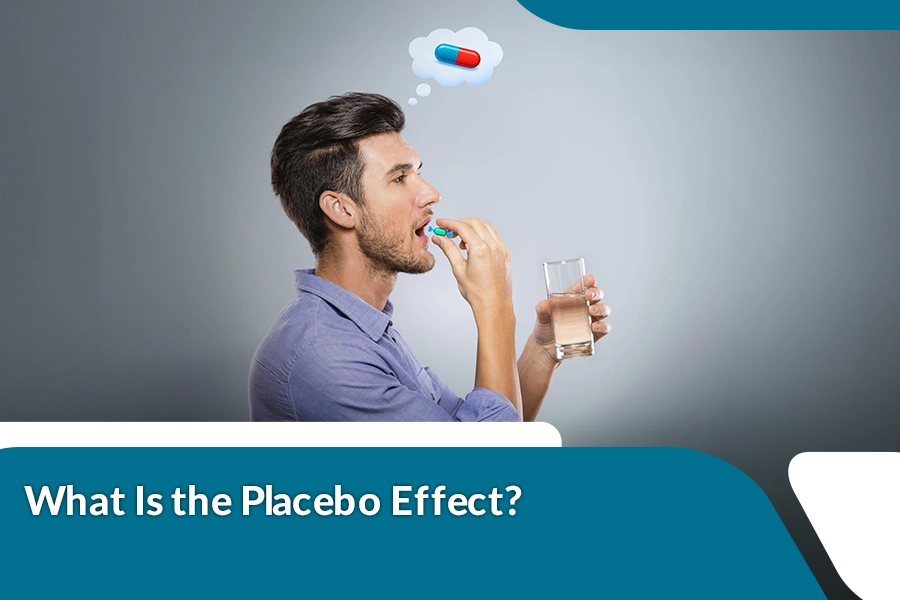
Somebody hands you a sugar pill, says it’s medicine, and somehow your headache actually gets better. That’s not a hypothetical, by the way-it happens in real studies, over and over, enough that it’s basically impossible to dismiss as a fluke anymore. The placebo effect gets tossed around casually, usually as a kind of shorthand for “it’s all in your head,” but that phrase does it a disservice. Because whatever’s going on here, it’s not nothing. Something in the body actually shifts. Pain drops. Mood lifts. And the pill itself did zero chemically. So what’s actually happening? That’s the part worth slowing down on, because the answer isn’t as simple as “belief is powerful,” even though that’s usually where the conversation stops. Let’s start with the basics.
What is the placebo effect?
The placebo effect is when someone experiences a real change in how they feel pain going down, mood lifting, symptoms easing after getting a treatment that has no actual medical ingredient in it. A sugar pill. A saline injection. Sometimes even a fake surgery. The treatment does nothing chemically. But the person’s body still responds like something happened.
And it’s not that they’re imagining it or “just being positive.” That’s the part that trips people up. Brain scans show actual changes. Pain pathways light up differently. Dopamine gets released. In some cases the body straight up produces its own natural painkillers just because the person believed they were about to get relief. Which is wild when you think about it, and then it’s also kind of not wild, because expectation shapes perception constantly in everyday life just usually in smaller, less measurable ways.
The point is: the placebo effect is a real physiological response, not a fake one, even though the “medicine” causing it is fake.
Where the word comes from
“Placebo” is Latin for “I shall please.” Which, fine, makes sense in a poetic way-it’s the thing that pleases the patient, or tricks them, depending how cynical you’re feeling that day. Physicians used the term way before modern clinical trials existed, sometimes just to describe giving a patient something to make them feel cared for, even if there wasn’t a real treatment available. Kind of dark when you think about the history of medicine honestly. A lot of “cures” throughout history were probably just placebo effects wearing a lab coat.
So does this mean the mind controls the body?
People love jumping to “mind over matter” whenever placebo comes up, and yeah, there’s some truth buried in there, but it’s messier than that phrase suggests. It’s not pure willpower. Nobody’s just deciding to heal. What’s actually happening seems to involve expectation, conditioning, and context like your brain picking up cues and using those cues to predict what’s about to happen to the body. And the body sort of… prepares accordingly.
This is why placebo effects tend to be stronger with injections than pills, and stronger with pills that are bigger, or a certain color, or more expensive-looking packaging. None of that changes the chemical content. Obviously. But it changes the expectation, and expectation seems to be doing a lot of the heavy lifting here.
Placebo effects tend to work best for things that are at least partly modulated by the brain and nervous system. Pain. Nausea. Anxiety. Depression symptoms. Fatigue. It’s not going to shrink a tumor. It’s not going to cure an infection. People sometimes want placebo to be this magic catch-all thing and it’s really not. It has a lane, and it stays mostly in that lane.

The nocebo effect, which nobody talks about enough
There’s a flip side too, called the nocebo effect, where expecting something bad actually makes you feel worse. Tell someone a treatment might cause nausea, and a chunk of them will report nausea even on the placebo. This is honestly one of the more uncomfortable parts of the whole topic because it means expectation can hurt people too, not just help them. Physicians have to walk this weird line where they’re supposed to be honest about side effects but also not accidentally talk patients into experiencing them.
Kind of makes you rethink how much of everyday physical discomfort is shaped by what we’re bracing for. Not all of it. But some of it, probably.
Why do researchers actually care about this?
In clinical trials, new drugs get tested against a placebo group specifically because researchers need to know if the drug is doing more than what belief alone could do. If a new anxiety medication performs the same as a sugar pill, that’s a problem for the drug even if patients in both groups improved. The placebo effect is basically the baseline that real treatments have to beat.
And this baseline is not small, by the way. In some pain studies, placebo groups show improvement rates north of 30%. Sometimes higher. This has actually made drug development harder in certain areas like depression treatment, because placebo response rates have crept up over the years for reasons nobody fully agrees on. Some researchers think it’s because trial participants now expect more from modern medicine. Others think it’s about how trials are run. Nobody’s fully settled the debate, and honestly that’s kind of the theme with this whole topic-a lot of “we think” and not enough “we know for certain.”
Can Physicians ethically use placebos on purpose?
This is where it gets murky. Prescribing a placebo without telling the patient is generally considered deceptive and most medical guidelines frown on it, or outright ban it. Some studies have shown that placebos can still work even when patients know they’re taking a placebo. These are called “open-label placebos.” Sounds like it shouldn’t work. Why would knowing it’s fake still help? But some trials on things like IBS and lower back pain found real symptom improvement even when patients were told upfront, “this is a sugar pill, it has no active ingredient.” The ritual of taking it, the ongoing care from a doctor, maybe just the act of doing something about the problem all of that seemed to matter on its own.
Which, again, kind of undercuts the assumption that deception is the whole mechanism. Maybe it’s not really about tricking the brain. Maybe it’s about signaling safety and care to the nervous system, and the “lie” was never the essential ingredient to begin with.
Placebo effect vs natural recovery
Not everything that looks like a placebo effect actually is one. Sometimes people just get better on their own-colds pass, backs heal, moods swing back up regardless of any pill. Researchers call this regression to the mean, and it gets tangled up with placebo effects constantly in casual conversation, even though they’re different things. If someone takes a fake pill for a headache and the headache goes away twenty minutes later, that might be the placebo effect, or it might just be… the headache going away, like headaches do. This mix-up happens a lot in alternative medicine marketing, honestly, where recovery that would’ve happened anyway gets credited to whatever remedy was taken right before it.
Final Thought
There’s probably no clean way to wrap this up, which feels appropriate given the topic. The placebo effect isn’t a trick, exactly, and it isn’t proof that the mind can heal anything either- it lives somewhere in between, doing real work but only in a limited lane. What keeps it interesting is how much it exposes about medicine in general: how much of feeling better depends on context, ritual, expectation, even the color of a pill. None of that makes real treatments less necessary. If anything it just means the story of “what heals us” was always messier than a chemical reaction on its own. Which, honestly, tracks with most things in the body-rarely one clean cause, usually a few things happening at once.
FAQs
1. Is the placebo effect just people imagining they feel better?
No, it involves real biological changes like pain relief chemicals released by the brain, not just imagination.
2. Can placebos cure diseases?
No, they mainly help with symptoms like pain, nausea, or mood, not underlying diseases like infections or tumors.
3. Do Placebos Work If You Know It Is a Placebo?
Sometimes, yes this is called an open-label placebo, and studies show it can still ease certain symptoms.
4. What’s the opposite of the placebo effect?
The nocebo effect, where expecting a bad outcome actually causes negative symptoms to appear.
5. Why do drug trials use placebos?
Because placebo responses can be surprisingly powerful, it is important to determine whether a new drug does better than belief and expectation alone.