Modamindfuels

0
Your Cart

No products in the cart.

No products in the cart.

Remove All Items

How Do Binaural Beats Affect Your Brain?
How Do Binaural Beats Affect Your Brain

So there’s this thing going around on YouTube and Spotify playlists – binaural beats – and honestly a lot of people don’t even know what they’re listening to when they hit play. They just see “focus music” or “study beats” and press go. But there’s actual science-ish stuff happening in the background here, or at least people claim there is.

This isn’t some brand new invention either. The concept has been around since the 1800s, a physicist named Heinrich Wilhelm Dove noticed it first, but it only really blew up in pop culture in the last decade or so. Wellness apps, sleep apps, meditation channels – everyone’s using binaural beats now like it’s some kind of magic trick.

What’s Actually Happening When You Play Two Different Tones?

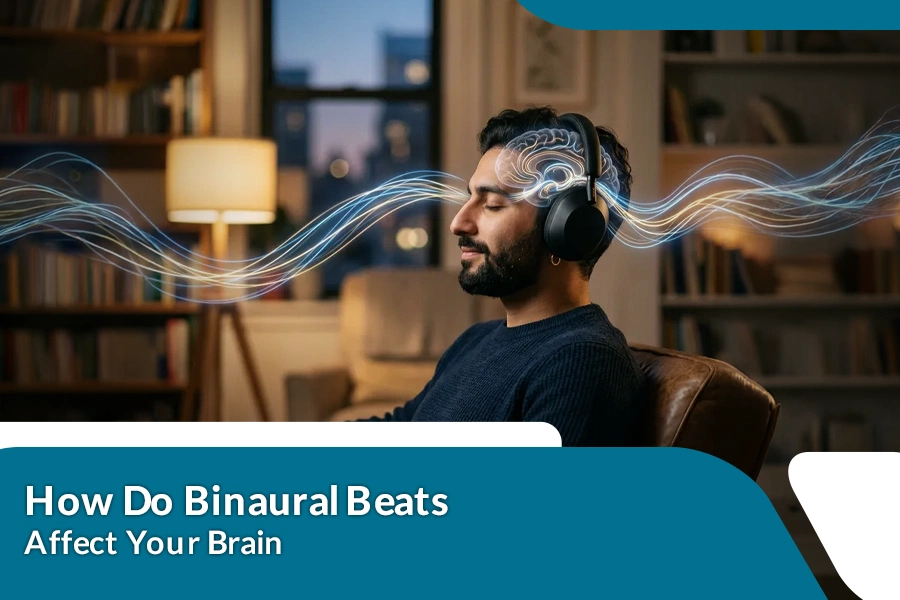
Okay here’s the basic idea, and I’ll try not to overcomplicate it because most explanations online make it sound way more technical than it needs to be. You play one tone in your left ear, say 200 Hz, and a slightly different tone in your right ear, say 210 Hz. Your brain doesn’t hear two separate tones though – it perceives a third “phantom” beat, which in this case would be 10 Hz. That phantom frequency is what people call the binaural beat.

Your brain sort of processes this difference and allegedly starts to sync its own electrical rhythm toward that frequency. This is the part where things get murky because not everyone agrees on how strong this effect actually is. Some studies say it’s real and measurable. Others say the effect is mild at best, maybe even placebo-adjacent. I’m not going to pretend there’s a clean answer here.


Artvigil 150mg available on modamindfuels

Brain Waves and Why They Matter?

Your brain naturally runs at different frequencies depending on what you’re doing. Deep sleep, daydreaming, focused work, panic – all different wave patterns. Delta waves are the slow ones during deep sleep. Theta shows up during light meditation or that weird half-awake state. Alpha is more of a calm-but-alert zone. Beta is your normal waking thinking mode, and gamma is supposedly linked to high-level processing, though honestly the research on that one still feels a bit shaky to me.

The theory behind binaural beats is that you can nudge your brain’s rhythm toward one of these states just by feeding it the right frequency difference through sound. Want to relax? Play something in the theta range. Want sharper focus? Go for beta range tones. It sounds almost too convenient, right? Like plug in headphones and boom, instant brain states change. Real life is messier than that, obviously.

PRICE FROM

$2.30 Per Pill

AVAILABLE DOSAGE

Does It Actually Help With Mental Focus, or Is That Just Marketing

There are people who swear binaural beats genuinely help them concentrate – like they put one on and suddenly homework or coding tasks feel easier. And there’s research pointing toward improvements in attention and even short term memory in some small trials. But then there’s also research showing basically no measurable difference compared to regular ambient noise or plain silence.

So which is it? Probably depends on the person. Some brains respond more to auditory entertainment than others. Placebo effect is also a huge, underrated force here – if you believe something’s going to help you focus, sometimes it just does, regardless of the actual mechanism behind it.

A lot of students and remote workers use binaural beats now as one more tool in their toolbox, alongside things like Pomodoro timers, or honestly sometimes alongside prescription stimulant-type meds. Not saying that’s ideal, just saying it happens – for example some people combine focus playlists with something like Artvigil 150 mg, which is a wakefulness-promoting medication some folks use off-label for concentration, though that’s a whole different conversation involving actual physician s, not YouTube playlists.

The Relaxation Side of Things

On the flip side, a chunk of this content out there isn’t about focus at all, it’s about winding down. Sleep, anxiety reduction, general stress relief – this seems to be where a lot of the stronger anecdotal evidence lives. People report falling asleep faster, feeling calmer during anxious spells, that kind of thing.

Slower brain rhythms like theta and delta are naturally associated with rest, so encouraging your mind toward those frequencies through sound could plausibly help some people relax faster than just sitting in silence trying to force themselves to chill out. This is basically one of the more popular relaxation techniques people reach for when meditation apps feel too structured or boring. Like the sound itself becomes a thing you’re hyperaware of, which is the opposite of calming. So again, it depends heavily on the individual.

Cognitive Performance Claims Get a Little Wild Sometimes

There’s a corner of the internet that treats this like it’s basically a nootropic you listen to instead of swallow. Claims about massively boosted brainpower, IQ-level improvements, memory enhancement that sounds almost too good. That’s where I get skeptical. The actual peer-reviewed evidence doesn’t really support dramatic cognitive upgrades. Mild, situational improvements? Maybe. A total brain overhaul from an audio track? Doubtful.

Still, “mild improvement” isn’t nothing. If a ten or fifteen minute session before studying helps someone settle in and actually start working instead of procrastinating, that’s a real practical benefit even if the neuroscience isn’t fully nailed down yet. Some people even describe it as a small focus improvement rather than anything dramatic, which honestly sounds about right based on what the research shows.

How People Actually Use Binaural Beats Day To Day

Most people aren’t running lab experiments on themselves, they’re just using low-volume audio stimulation in the background while working, studying, or trying to sleep. Headphones in, maybe paired with white noise or nature sounds layered underneath. Some apps let you pick a “mode” – focus, relax, sleep, meditate – and behind the scenes it’s adjusting the frequency gap between the two tones being played.

You do need stereo headphones for this to work properly, that’s one thing a lot of people miss. If you’re playing it through a speaker, both ears hear the same mix and the brain doesn’t get the separate-tone effect it needs to perceive that phantom beat. Kind of an easy detail to overlook, and it trips a lot of first-timers up.

The Honest Limitations Nobody Really Talks About

Not every study on binaural beats holds up well under scrutiny. Sample sizes tend to be small. Some results don’t replicate well. And a good chunk of “research” floating around isn’t peer-reviewed at all, it’s just company blog content dressed up like science, which – yeah, a little ironic given what you’re reading right now, I know.

So take dramatic before-and-after claims with a grain of salt. The realistic picture is: mild to moderate potential benefits for relaxation and maybe some support for concentration, but not a guaranteed fix, and definitely not a replacement for actual sleep stress management, or medical treatment if something more serious is going on. There’s also debate about whether measurable shifts in brain function even happen consistently across different people, and that’s honestly still an open question.

Final Thoughts 

So pulling all this together – this whole approach seems to sit somewhere between real science and internet hype, and honestly that’s probably the most accurate way to describe most of it. There’s a legitimate mechanism behind binaural beats, the two-tone thing and the brain perceiving a phantom frequency; that part isn’t made up.

What’s murkier is how strongly that translates into actual changes day to day, whether that’s relaxation, sleep, or sharper focus during work. The relaxation side seems to have the most consistent anecdotal support, people genuinely do report calmer minds and easier sleep. The concentration and cognitive angle is shakier, some people notice a real difference, others notice nothing, and the research itself is a mixed bag rather than a clear yes or no. Mental clarity, better concentration, whatever benefits someone’s chasing – it seems to depend heavily on the individual brain doing the listening, which isn’t a very satisfying conclusion but does seem to be the honest one.

None of this replaces actual sleep, proper stress management, or medical care when something more serious is going on. It’s a small, low-effort addition to a routine, not a fix on its own. Some people will get real value out of it, some won’t notice much of anything, and both outcomes are apparently normal. Worth a try, worth staying realistic about, and probably worth pairing with better habits overall rather than treating it as the whole solution.

FAQs

1. Do binaural beats really change brain activity? 

There’s some evidence they can nudge patterns slightly, but the effect size varies a lot between people.

2. How long should I listen for it to work? 

Most people try somewhere around 15 to 30 minutes, though there’s no universally agreed “correct” duration.

3. Can I use regular earbuds or do I need special headphones? 

Any stereo headphones work fine, you just can’t use a single speaker since both ears need to hear different tones.

4. Are binaural beats safe for everyone? 

Generally yes for most people, but those with epilepsy or certain neurological conditions should check with a physician first.

5. Can this replace medication for focus or anxiety? 

No, it’s more of a complementary tool, not a substitute for prescribed treatment or professional advice.

Shopping Cart
Scroll to Top