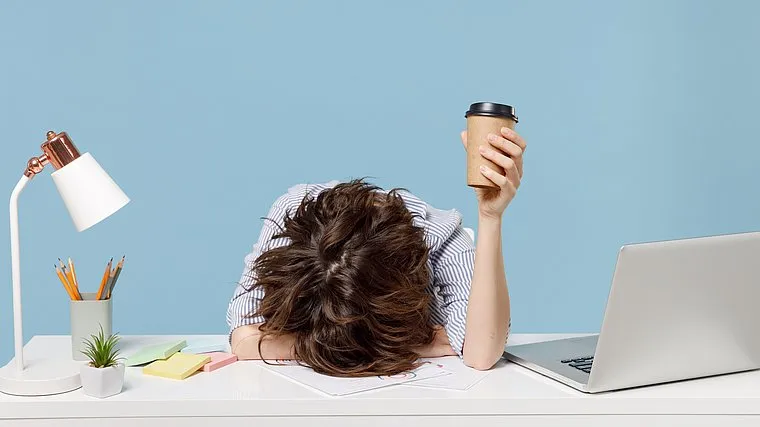
So it’s 3 pm. You were doing fine, maybe even really productive around 10 am or 11 am . Then somewhere between lunch and your fourth cup of coffee, your brain just… stops cooperating. You’re staring at your screen, rereading the same paragraph for the third time, and you’d honestly consider sleeping under your desk if that was somehow socially acceptable.
You’re not imagining it. The afternoon energy crash is real, it’s biological, and it happens to an absurd number of people across every kind of job, every time zone, every diet. And no, it’s not just because you ate too much at lunch – though that doesn’t help. The afternoon energy crash has been studied enough at this point that calling it a productivity myth feels genuinely silly.
What is the 3 pm Slump?
The 3 pm slump is this specific window, roughly between 1 and 4 in the afternoon, where the human body experiences a pretty dramatic dip in alertness. It’s not random. It’s tied to your circadian rhythm, which is basicall y your body’s internal 24-hour clock that controls when you feel awake, when you’re hungry, when you sleep, and honestly a ton of other stuff most people never think about. There’s a secondary dip in the alertness cycle that naturally falls right around early afternoon. So the timing isn’t a coincidence – it’s almost like your body has this built-in siesta (a short nap) signal that most Western workplaces completely ignore.
What makes it worse is that adenosine, a chemical in the brain that builds up the longer you’re awake, hits a kind of tipping point by mid-afternoon. The longer you’ve been conscious and busy, the more adenosine has accumulated. And by 3 pm, it’s basically making a very strong case for a nap. Caffeine works by blocking adenosine receptors, which is why your morning coffee feels so effective – but by afternoon, you’ve often already burned through that effect.
The Circadian Rhythm actually matters more than people think
Most people have heard of circadian rhythms, but the actual mechanics are kind of wild when you dig in. Your core body temperature drops twice in a 24-hour cycle. Once at night when you’re supposed to sleep, and once – here’s the part people don’t know – in the early-to-mid afternoon. That temperature drop signals lower alertness and reduced cognitive processing. It’s not a flaw. It was probably useful at some point in human history when a midday rest made sense. This is also why afternoon fatigue feels different from regular tiredness. Like, you’re not sleepy in the same way you are at midnight. It’s more like… fog. Your reactions slow, your motivation dips, and the stuff that requires actual mental effort – writing, problem-solving, making decisions – becomes weirdly hard.
Workplace productivity tanks during this window, and honestly most office environments are completely set up to fight against this without even knowing it. Meetings at 2:30 pm are basically a punishment. And mental fatigue from a full morning of work is already in the mix by then, making everything feel heavier than it should.
Why Does Lunch Make It Worse?
Here’s where it gets a bit more complicated. Eating – especially a meal that’s heavy in refined carbs or sugar – causes a spike in blood glucose. Your body releases insulin in response. Blood sugar goes up, then it comes down. And when it dips back down, your brain gets the signal that energy is scarce, which contributes to that heavy, slow feeling. The thing is though, even if you eat a “healthy” lunch, the afternoon energy crash still happens to some degree because it’s driven by the circadian dip anyway. The meal just makes it more pronounced if you’re not careful about what you’re eating.
Protein and fiber slow glucose absorption and keep things more stable. Fat-heavy meals can make people feel sluggish because digestion slows things down. There’s a reason people feel sleepy after big meals – blood gets redirected to support digestion, and the brain gets a bit less of the action for a while.
What's Happening in Your Brain?
Energy levels at work are pretty directly tied to what’s happening neurochemically, even if most people would never describe it that way. By mid-afternoon, you’ve got a few things going on at once. Adenosine is high. Core body temperature has dipped. If you’ve had caffeine in the morning, the effects are wearing off. If you didn’t sleep well last night, the sleep pressure is even higher. And on top of all that, serotonin levels tend to fluctuate in the afternoon, which can mess with mood and focus in ways that feel kind of hard to put your finger on.
Daytime sleepiness is also tied to something called the homeostatic sleep drive – essentially, the longer you’ve been awake, the stronger your body pushes for rest. By 3 pm, most people have been awake for 7 to 9 hours. That’s long enough for significant sleep pressure to build up. There’s also the dopamine angle. If your morning was high-stimulus – lots of emails, meetings, decisions – your brain has already spent a chunk of its dopamine reserves on attention and motivation. By afternoon, there’s less available, which makes getting started on tasks feel harder than it objectively should be.
Mental Fatigue Is Different From Physical Tiredness
Mental fatigue is real but still kind of underestimated. Like people accept that your legs get tired after running, but somehow expect the brain to operate at 100% for 8 hours straight with no degradation. Cognitive tasks use glucose. They’re metabolically expensive. And there’s actually research suggesting that after sustained periods of demanding mental work, the brain starts to shift strategies – choosing simpler, lower-effort neural pathways rather than the more demanding ones that produce better results. This is part of why work performance drops in the afternoon: it’s not that you care less, it’s that your brain is literally conserving resources.
Decision-making, in particular, is really affected by this. There’s a concept called decision fatigue where the quality of your choices deteriorates the more decisions you make throughout a day. By 3 pm, if you’ve been making calls and solving problems all morning, your judgment is probably measurably worse than it was at 9 am. That’s a strange thing to sit with, honestly.
Energy Crash Causes
The energy crash causes aren’t mysterious, they’re just kind of stacked. Circadian rhythm dip + adenosine buildup + post-meal glucose fluctuation + depleted neurotransmitters + accumulated sleep pressure + whatever stress you’ve been carrying all day. It all lands in the same window.
And for people with poor sleep patterns or irregular schedules, it’s noticeably worse. Shift workers, new parents, anyone who’s been burning the candle at both ends – the afternoon energy crash hits harder when your baseline is already compromised.
Staying Alert Naturally – What Actually Helps
There’s a lot of noise out there about productivity hacks, and most of it ranges from mildly useful to completely made up. But some things do have solid backing. Short walks, even just 10 minutes outside, can meaningfully improve alertness. Sunlight helps reset alertness signals through the eyes. Moving your body at all shifts blood flow and temporarily counteracts the circadian dip. Strategic caffeine timing helps too. If you delay your first coffee until 9:30 am or 10 am instead of having it the moment you wake up, the effects carry further into the day and you might not hit the wall quite as hard by early afternoon. Productivity tips around the afternoon dip often focus on matching task type to your energy level. Low-cognitive tasks – filing, admin, replying to easy emails – work fine when your brain is in low gear. Saving creative or strategic work for mornings when cognitive resources are higher is a genuinely useful scheduling shift.
Some people, particularly those with severe daytime sleepiness issues or demanding cognitive workloads, turn to wakefulness-promoting medications. Modawake 200 mg is one such option – it’s a eugeroic agent (meaning it promotes wakefulness rather than operating like a traditional stimulant) and has been used off-label by people trying to manage afternoon alertness. It works differently from caffeine and doesn’t typically cause the same crash afterward. That said, anything in this category should really be discussed with a physician before you start messing with it. Staying alert naturally through a combination of light exposure, movement, and task-switching is still the lowest-risk approach for most people, and it genuinely works better than grinding through the afternoon energy crash on caffeine alone.
The Nap Debate
There’s actually a decent amount of evidence that a short nap – 10 to 20 minutes – during the afternoon dip can restore alertness pretty effectively. The Japanese even have a concept for this, inemuri, which is culturally accepted workplace dozing.
The problem is that most workplaces in the US and UK aren’t exactly designed for napping. And naps over about 30 minutes tend to push you into deeper sleep stages, which can cause that groggy, disoriented feeling when you wake up – which is arguably worse than the original slump.
The Bigger Picture
The honest takeaway is that fighting the 3 pm slump by just drinking more coffee or telling yourself to focus harder isn’t really dealing with the underlying biology. It’s like trying to fix a structural problem with tape. Working with your circadian rhythm – structuring your most demanding work in the morning, building in a break during the natural dip, getting sunlight and movement throughout the day – is genuinely more effective than most people give it credit for.
The afternoon energy crash isn’t a character flaw. It’s your brain and body doing exactly what they were built to do. The mismatch is between our biology and the 9-to-5 work structure that doesn’t account for any of this. Which is kind of funny when you think about it – we built these elaborate systems around human productivity without actually asking how humans biologically function. If it’s 3 pm where you are and you’re reading this because you can’t focus on your actual work, this might be the most productive thing you’ve done in the last hour. And that’s valid.
FAQs
1.  Why do I always feel tired at 3 pm even when I sleep well?
It’s your circadian rhythm causing a natural alertness dip in the early afternoon – it happens even with a full night’s sleep.
2.  Does eating lunch make the afternoon slump worse?
It can, especially if your meal is high in carbs or sugar, which causes a blood glucose drop that adds to the existing tiredness.
3.  Is the 3 pm slump worse if I didn’t sleep enough?
Poor sleep amplifies adenosine buildup and sleep pressure, making the afternoon dip noticeably more intense.
4.  Can a short nap actually help with afternoon fatigue?
A 10 to 20-minute nap during the dip can restore alertness, just don’t sleep longer or you’ll wake up feeling worse.