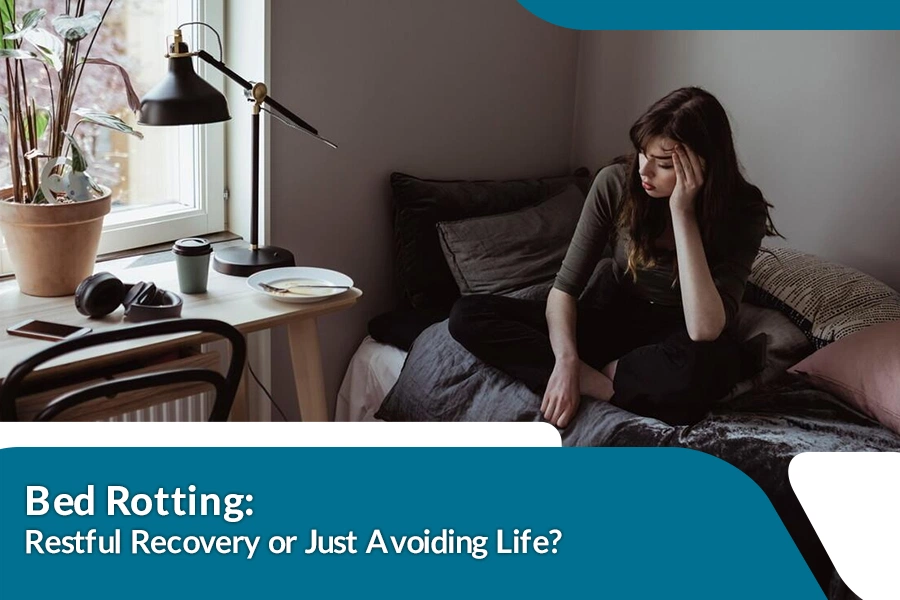
Have you ever stumbled on the word bed rotting and kept wondering where it came from? There are videos on TikTok tagged with #Bedrotting involves clips of people lounging under the covers for extended periods, streaming shows, doomscrolling, or eating snacks and calling it the pinnacle of self-care. This phenomenon is known as bed rotting and this got viral in 2023 and still continues to spark discussion and news articles.Â
In this article we will unpack the bed rotting trend, separate rest and recovery with the avoidance and many more.Â
What is Bed Rotting?

Bed Rotting is a viral slang term used for staying in bed the whole day awake-often eating snacks, doomscrolling, using social media to an extent where you don’t feel like getting out. It is usually used to rest and recover from mental fatigue, brain fog and other issues. According to a survey in 2024, a quarter of Gen Z generation reported staying in bed for a day or more to relax or use devices. The term was added to an online dictionary portal in 2024 with around 1700 new or updated definitions.Â
What’s different now is that it’s framed as self care instead of laziness. And honestly that reframe matters more than people give it credit for. Calling it “rest” instead of “being lazy” changes how guilty you feel doing it.
Is it actually restful?
Lying in bed all day sounds restful on paper. Your body isn’t moving, no stress from meetings or errands, nothing demanding your attention except maybe your phone. Sounds like the definition of rest and recovery. But actual physical rest and mental rest aren’t the same thing. You can lie in bed for 6 hours scrolling through your phone and somehow feel more drained than when you started. That’s not really rest, that’s just… stillness with stimulation. There’s a difference and most people blur the line without noticing.
Sleep researchers have pointed out that prolonged bed rest without actual sleep can mess with your circadian rhythm. Your body starts associating the bed with awake-scrolling-eating-crumbs instead of sleep, which then messes with your actual sleep later. So the thing meant to help you recover might quietly wreck your sleep quality down the line.Â
When is it good for you?
Bed rotting is not bad , it is something that is needed by every person. After a brutal week, a rough breakup, burnout that’s been building for months-sometimes your body and brain are just asking for a full stop. And there’s nothing wrong with giving yourself that. Healthy rest habits don’t always look productive from the outside. Sometimes rest looks like doing absolutely nothing and that’s fine.
The occasional lazy Sunday where you don’t leave your bed until 2 pm? Probably harmless. Might even be exactly what you needed. Bodies aren’t machines, they need downtime that isn’t scheduled or optimized or turned into a wellness routine with steps.
The key word there is occasional though. One day here and there is different from a pattern.

When it turns into avoidance
Sometimes bed rotting isn’t about rest at all; it’s about not wanting to face something. A difficult conversation you’re dreading, a job you hate, grief that hasn’t been processed, anxiety that’s easier to numb out under blankets than deal with it. Rest versus avoidance is a genuinely blurry line and honestly most people can’t tell the difference in themselves in real time. You just feel tired, so you stay in bed. But if that “one tired day” turns into most days, something else might be going on underneath it.
Mental health rest and mental health avoidance can look almost identical from the outside. Same bed, same posture, same phone glow on the face. The difference is more about why and how long, not what it looks like.
What happens when you stay in bed for a longer time?
Physically speaking, too much time lying down isn’t great either. Muscles get stiff, energy dips even more, and prolonged bed rest has actually been linked in studies to worse mood, not better. Movement, even light movement, tends to help mental state more than staying still does. Which feels backwards when you’re exhausted and all you want is to not move, but that’s kind of how it works.
There’s also the thing where too much daytime bed time confuses your body’s whole rhythm. Bed becomes this all-purpose space; sleep, scroll, eat, avoid, repeat-instead of a place specifically tied to rest. Sleep experts often say keep the bed for sleep only, and bed rotting kind of throws that advice out the window entirely.
Other ways to decompress that aren’t just lying there
If bed rotting feels like the only move left, it probably isn’t, it just feels that way when you’re drained. A short walk outside, even ten minutes, does something a phone-scroll marathon never quite manages-fresh air, a change of scenery, blood circulation and so on. Sitting outside with a coffee, no phone, counts too. Sounds too simple to actually help but somehow it does. Journaling for a few minutes, even messy unstructured venting on paper, tends to get the avoided stuff out of your head instead of just letting it loop while you stare at the ceiling. Calling a friend, not texting, actually calling, can do more for that heavy feeling than another hour under the covers.
Stretching on the floor, or honestly just lying on the floor instead of the bed, sounds silly but it breaks the association your brain has built between bed and shutting down. A bath works for some people. A boring chore, weirdly, works for others-folding laundry or doing dishes can be oddly grounding when your brain’s spinning too much to sit still with itself.
None of these are groundbreaking. That’s kind of the point though, rest and recovery doesn’t need to be some elaborate routine. It just needs to actually involve leaving the loop your brain’s stuck in, which bed rotting, most of the time, doesn’t.
Final Verdict
Short bursts of just doing nothing in bed is genuinely fine and even good at times. It usually helps to turn bed rotting into a daily coping mechanism that replaces actual rest, actual connection, actual movement-that’s when it stops being healthy rest habits and starts being something to pay attention to.
Maybe the better question isn’t “is bed rotting good or bad” but more like-what’s it doing for you specifically, right now, today. Some days it’s recovery. Some days it’s hiding. Both can happen in the same week, even the same person.
Not everything needs a clean answer. This might be one of those things.
FAQs
Is bed rotting bad for mental health?Â
Not automatically, but doing it constantly instead of dealing with stress can make anxiety or low mood worse over time.
2. How long is too long for bed rotting?Â
There’s no strict number, but if it stretches into most days for weeks, it’s worth checking in with yourself.
3. Can bed rotting help with burnout?Â
A short stretch can, yes. But long-term burnout usually needs more than staying in bed.
4. Is bed rotting the same as depression?Â
No but excessive bed time can sometimes be a sign of depression, especially paired with low motivation.
5. Should I feel guilty about bed rotting?Â
Occasional rest days don’t need guilt. Frequent ones might just need a little honesty about why you are resting so much.