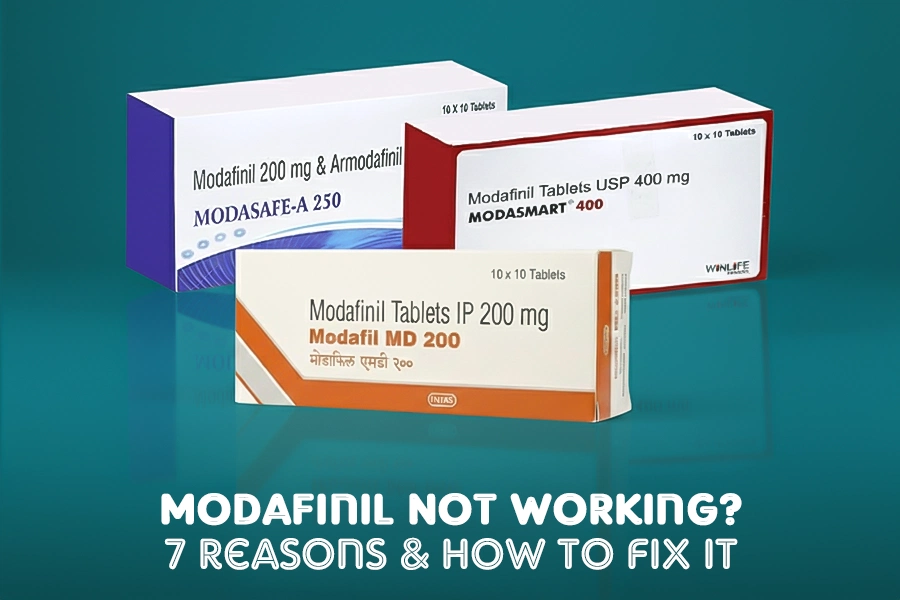
Modafinil is widely used to promote wakefulness and sharpen attention, but sometimes it feels like the pill simply doesn’t do what it used to. If you’re asking, “Why is modafinil not working?”, you’re not alone. This post breaks down seven common reasons modafinil may seem ineffective, explains the science behind each problem, and gives practical fixes you can discuss with your clinician.
Quick summary
Common causes of reduced modafinil effect include:
- Incorrect timing or dose.
- Drug–drug or food interactions.
- Accumulated sleep debt or poor sleep hygiene.
- Tolerance or reduced responsiveness.
- Low-quality or counterfeit medication.
- Individual metabolism/genetics and health conditions.
- Wrong expectation, modafinil improves alertness, not learning magic.
Read on for the full explanation and fixes.
Best Sellers
-
Modalert 100mg Australia
$69.00 – $449.00Price range: $69.00 through $449.00Shop Now This product has multiple variants. The options may be chosen on the product page -
Modalert 200mg Australia
$69.00 – $449.00Price range: $69.00 through $449.00Shop Now This product has multiple variants. The options may be chosen on the product page -
Armodavinil 150mg
$69.00 – $395.00Price range: $69.00 through $395.00Shop Now This product has multiple variants. The options may be chosen on the product page -
Modavinil 200mg
$69.00 – $395.00Price range: $69.00 through $395.00Shop Now This product has multiple variants. The options may be chosen on the product page -
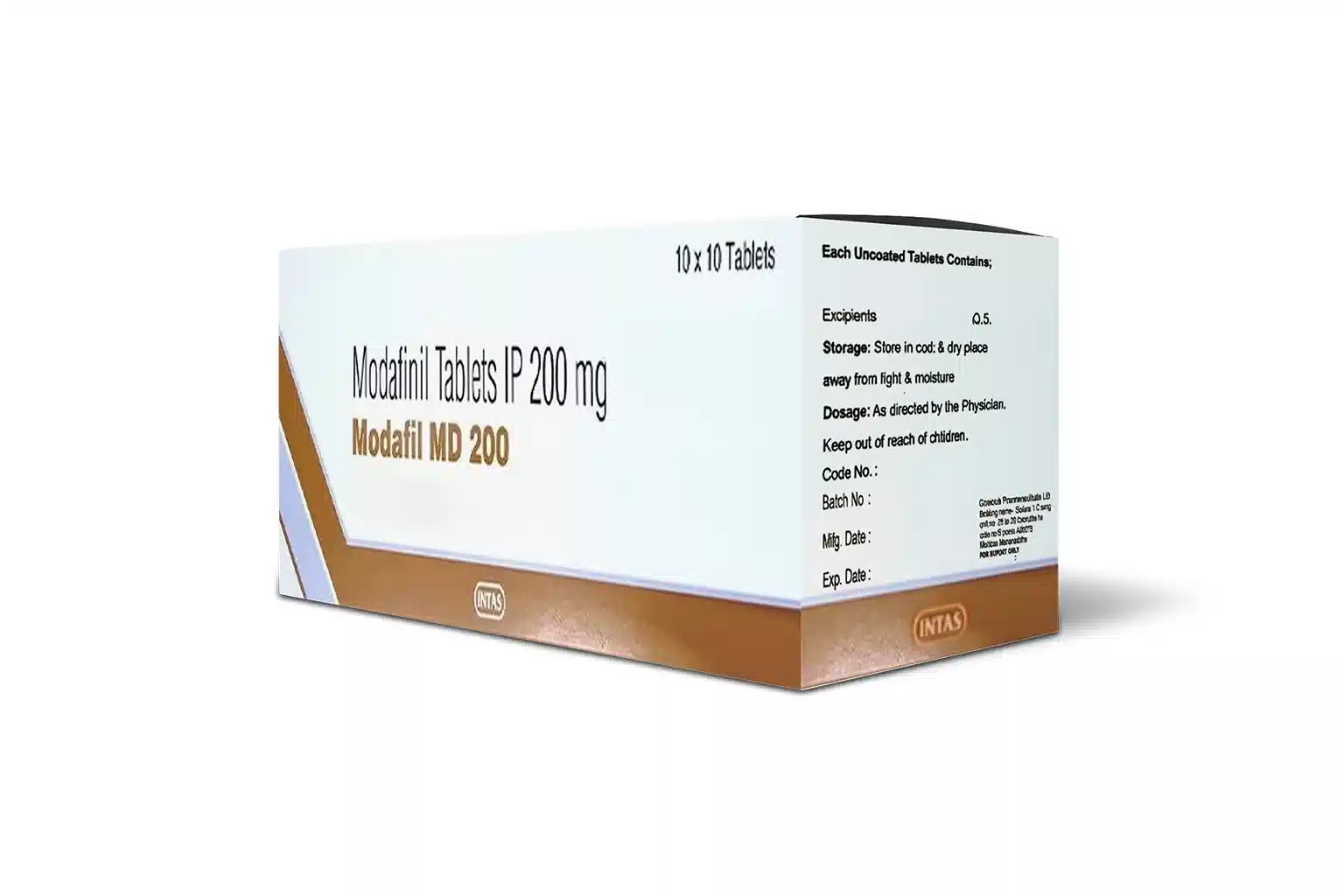
Modafil Md 200 mg
$69.00 – $345.00Price range: $69.00 through $345.00Shop Now This product has multiple variants. The options may be chosen on the product page -
Modvigil 200mg
$65.00 – $395.00Price range: $65.00 through $395.00Shop Now This product has multiple variants. The options may be chosen on the product page
How modafinil works
Modafinil is a wakefulness-promoting agent (a “eugeroic”) that affects multiple neurotransmitter systems and is mainly metabolized in the liver; its usual clinical dose is 200 mg once daily (typically in the morning for narcolepsy or early before a shift for shift-work disorder).
Reason 1 - Timing and dosing are wrong
Why it matters: Modafinils onset and duration matter. It has a plasma half-life around 12–15 hours and is typically given in the morning for daytime sleepiness; for shift work it’s usually timed ~1 hour before the shift. Taking it too late, too early, or at a non-recommended dose can blunt the benefit.
How to fix it:
- Follow prescribing guidance: 200 mg in the morning is standard for most indications. If you were advised otherwise by a clinician, follow their plan.
- Use it before your expected peak-demand period (e.g., 45–90 minutes before an exam block or work shift).
- If you were splitting doses or taking it late in the day, discuss timing adjustments with your doctor; late dosing can also degrade sleep and paradoxically reduce next-day effectiveness.
Reason 2 – Interactions with other drugs or supplements
Why it matters: Modafinil can induce certain liver enzymes (notably CYP3A4) and interact with many drugs (including hormonal contraceptives, some antidepressants, and sedatives). These interactions can lower or raise levels of other medicines and may reduce clinical efficacy or safety. Conversely, some co-medications can alter modafinil levels.
How to fix it:
- Compile a complete medication list (prescription, OTC, and supplements) and review it with your prescriber or pharmacist. Use interaction checkers (clinical pharmacists often rely on tools like Drugs.com or drug monographs) to spot risks.
- If you’re on hormonal contraception, be aware that modafinil may reduce contraceptive effectiveness; ask your clinician about backup contraception.
- Don’t combine modafinil with other stimulants without medical advice.
Reason 3 – Sleep debt, sleep disorders, or poor sleep hygiene
Why it matters: Modafinil helps with wakefulness but does not replace sleep. If you’re chronically sleep-deprived, have untreated sleep apnea, or suffer from another sleep disorder, the drug’s effect will be limited because the underlying physiological need for sleep remains. Studies show modafinil is effective for conditions like narcolepsy and obstructive sleep apnea when used as part of clinical care, but it’s not a fix for ongoing poor sleep habits.
How to fix it:
- Prioritize consistent, sufficient sleep; this is the single most important cognitive enhancer.
- If you experience excessive daytime sleepiness despite good sleep habits, get evaluated for sleep disorders (sleep apnea, narcolepsy, idiopathic hypersomnia). If a disorder is present, treating it properly often restores drug responsiveness.
Reason 4 – Tolerance or reduced responsiveness over time
Why it matters: True pharmacologic tolerance to modafinil is not universally observed; many long-term trials report sustained benefit, but some patients do report reduced effects after prolonged use. Case series and clinical reports suggest tolerance can occur in a subset of people, and clinicians sometimes use strategies like dose adjustment or drug holidays. There is emerging clinical experience (and small studies) about switching drugs or taking temporary breaks to restore benefit.
How to fix it:
- Don’t self-escalate the dose. Increasing the dose without clinical guidance raises side-effect risk. The manufacturer’s guidance and clinical practice typically cap dosing; discuss options with your prescriber.
- Your clinician may consider: a carefully supervised dose change, switching to an alternative (e.g., armodafinil in some cases), or, in rare cases, a supervised “drug holiday” with clinician monitoring or bridging strategies (reported in select clinical contexts). Never try abrupt changes without medical oversight.
Reason 5 – Low-quality, counterfeit, or wrongly stored medication
Why it matters: If the tablet you took is counterfeit, degraded by heat/humidity, or incorrectly dosed, it can have little or no effect. The global market for pharmaceuticals includes substandard products, which is especially relevant when medicine is purchased from unverified online sellers.
How to fix it:
- Always get modafinil from a licensed pharmacy or your healthcare system.
- Check packaging, batch numbers, and expiry dates. If you suspect counterfeit medication, stop taking it and consult a pharmacist or clinician.
- Keep medication in recommended storage conditions (usually a cool, dry place unless the label says otherwise).
Reason 6 – Individual metabolism, medical conditions, or genetics
Why it matters: People metabolize drugs differently. Modafinil is primarily metabolized in the liver (including hydrolysis and CYP-mediated pathways). Liver impairment, age, or genetic differences in metabolizing enzymes can change drug levels and effects. For example, severe hepatic impairment reduces clearance and requires dose adjustments.
How to fix it:
- Share your full medical history (liver disease, kidney disease, age-related issues) with the prescriber. Dose adjustments may be needed.
- If you suspect genetic variability is relevant (e.g., unusual reactions or lack of effect), a specialist (clinical pharmacologist) or specialist sleep clinic may help evaluate options.
Reason 7 – Expectation mismatch
Why it matters: Modafinil improves wakefulness and certain aspects of attention; it does not automatically increase learning, creativity, or memory to superhuman levels. Clinical and lab studies show the strongest, most reliable benefits for sustained attention and wakefulness, especially under sleep deprivation. Effects on higher-order creativity or long-term learning are modest and task-dependent. If you expected a “study magic” pill, disappointment is understandable.
How to fix it:
- Combine med-supported alertness with evidence-based study techniques: active recall, spaced repetition, focused study blocks (Pomodoro), and adequate sleep for consolidation.
- Use the medication strategically for demanding tasks rather than relying on it as a permanent performance crutch.
- Track whether objective outcomes (task completion, test scores, work quality) actually improve rather than relying on subjective feelings alone.
Practical checklist you can use right now
- Confirm dose & timing with your prescriber (standard: 200 mg in the morning for most cases).
- Review all medications & supplements for interactions—ask a pharmacist.
- Evaluate sleep quality and rule out sleep disorders with a clinician if daytime sleepiness persists.
- Verify medication source and packaging; avoid unverified online pharmacies.
- Don’t increase the dose or combine stimulants without supervision.
- Keep realistic expectations, pair pharmacology with sound study/work habits.
When to see your doctor right away
If you have new or worsening chest pain, shortness of breath, severe rash, signs of liver trouble (jaundice, dark urine), or marked psychiatric symptoms (new agitation, hallucinations), stop the drug and seek medical care. These are rare but potentially serious. The FDA label and safety literature list such warnings.
Bottom line
If modafinil seems to stop working, don’t panic, but do take it seriously. Most causes are fixable: timing, interactions, sleep debt, medication quality, or unrealistic expectations. The correct next step is a methodical review, dose & timing, medication interactions, sleep quality, and a clinical re-evaluation. Never self-adjust or mix medications without talking to a qualified clinician. With the right troubleshooting, many people regain benefits or find a safer, more effective plan.
FAQs
Q1: Is tolerance common with modafinil?
Large trials generally report sustained efficacy without widespread tolerance, but individual cases of reduced responsiveness over time have been reported. Strategies exist, but any changes should be clinician-guided.
Q2: Can I combine modafinil with caffeine?
Some people use caffeine to augment alertness; that can increase jitteriness, anxiety, or sleep disruption in others. Discuss combined use with your clinician if you have cardiovascular, anxiety, or sleep concerns.
Q3: My contraceptive seemed less reliable after starting modafinil. What do I do?
Modafinil can induce metabolic pathways that reduce hormonal contraceptive levels. Use a backup method and talk to your clinician about alternatives.
Q4: Is armodafinil a better alternative?
Armodafinil (the R-enantiomer) has somewhat different pharmacokinetics and may feel different for some people. Whether it’s “better” depends on individual response; discuss switching with your prescriber.

References
- Greenblatt K. Modafinil. StatPearls (NCBI Bookshelf). 2023. (Dosing, indications, administration). NCBI
- U.S. FDA. PROVIGIL® (modafinil) Tablets – Prescribing Information (label). (Safety warnings, dosing adjustments). FDA Access Data
- Hashemian SMR, et al. A review on modafinil: the characteristics, function, and use in … (2020). (Efficacy, tolerance evidence). PMC