Modafinil Duration: How Long Does It Last?
Modafinil duration and how long it lasts comes down to pharmacokinetics, specifically half-life and the relationship between plasma concentration and effect.
The modafinil half-life in most adults falls between twelve and fifteen hours. Half-life is the time your body takes to eliminate half the drug from your bloodstream. This number matters because it tells you that modafinil doesn’t simply switch off at a fixed point. It tapers gradually as concentration falls. Effects don’t disappear the moment half-life is reached. They diminish progressively as the drug clears.
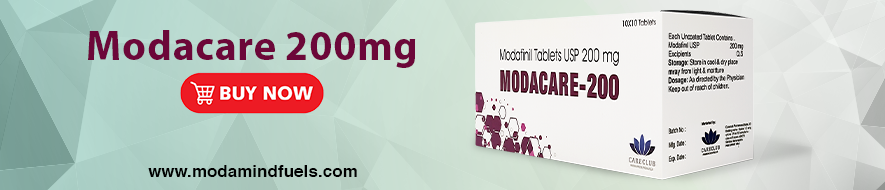
A practical example: you take 200mg of Modacare 200mg at 7 AM. Peak plasma concentration arrives roughly two to four hours later, around 9 to 11 AM. By 7 PM to 10 PM, depending on your individual metabolism, plasma levels have dropped by half. Noticeable cognitive effects often persist well past this point because the brain’s threshold for response is lower than peak concentration. You might feel meaningfully alert until 10 or 11 PM from a morning dose. Trying to sleep before then can range from difficult to impossible.
This is why timing matters so much with modafinil. The drug isn’t done with you on your schedule.
-

Modavinil 200mg
Price range: $69.00 through $395.00 -
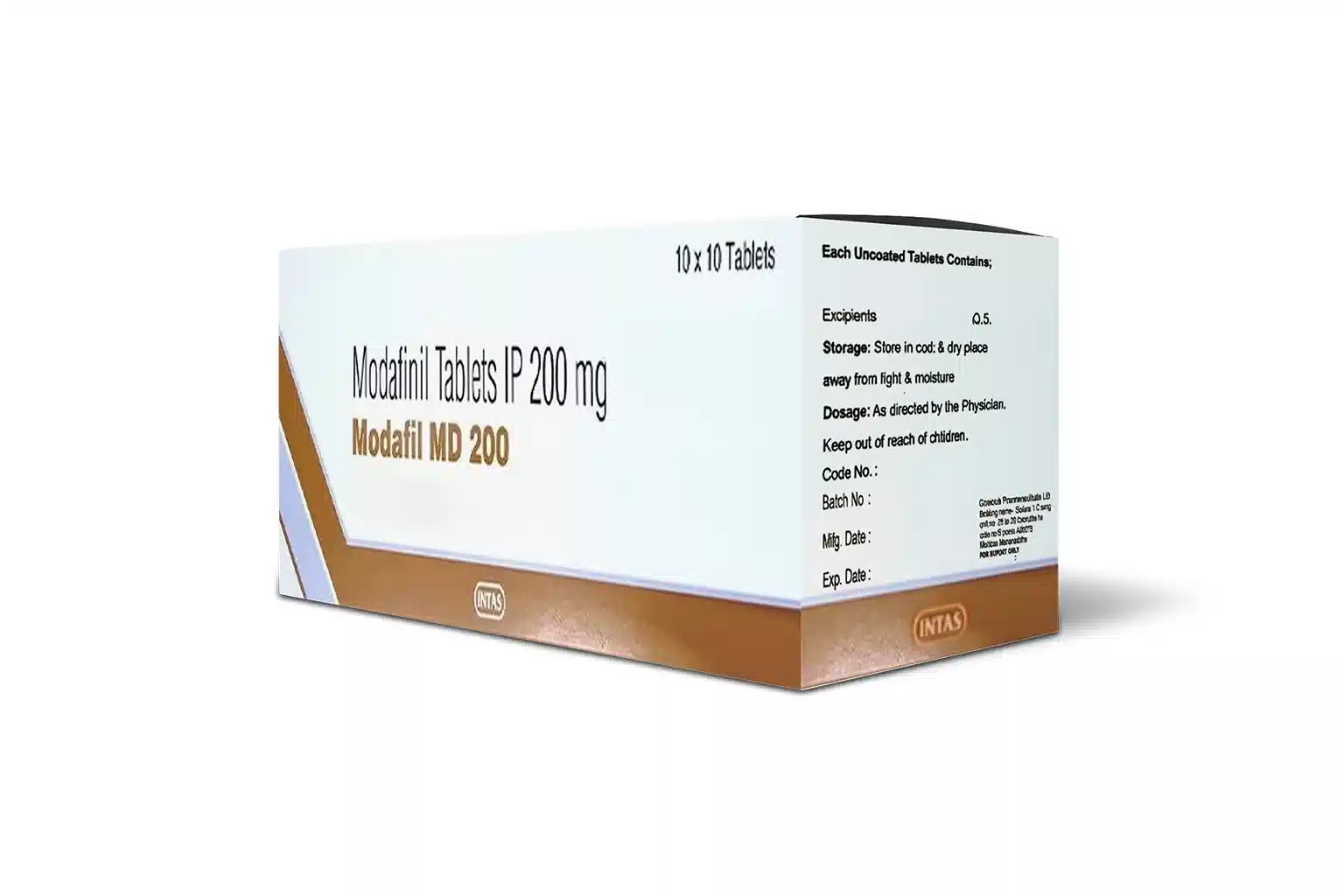
Modafil Md 200 mg
Price range: $69.00 through $345.00 -
Modvigil 200mg
Price range: $65.00 through $395.00 -
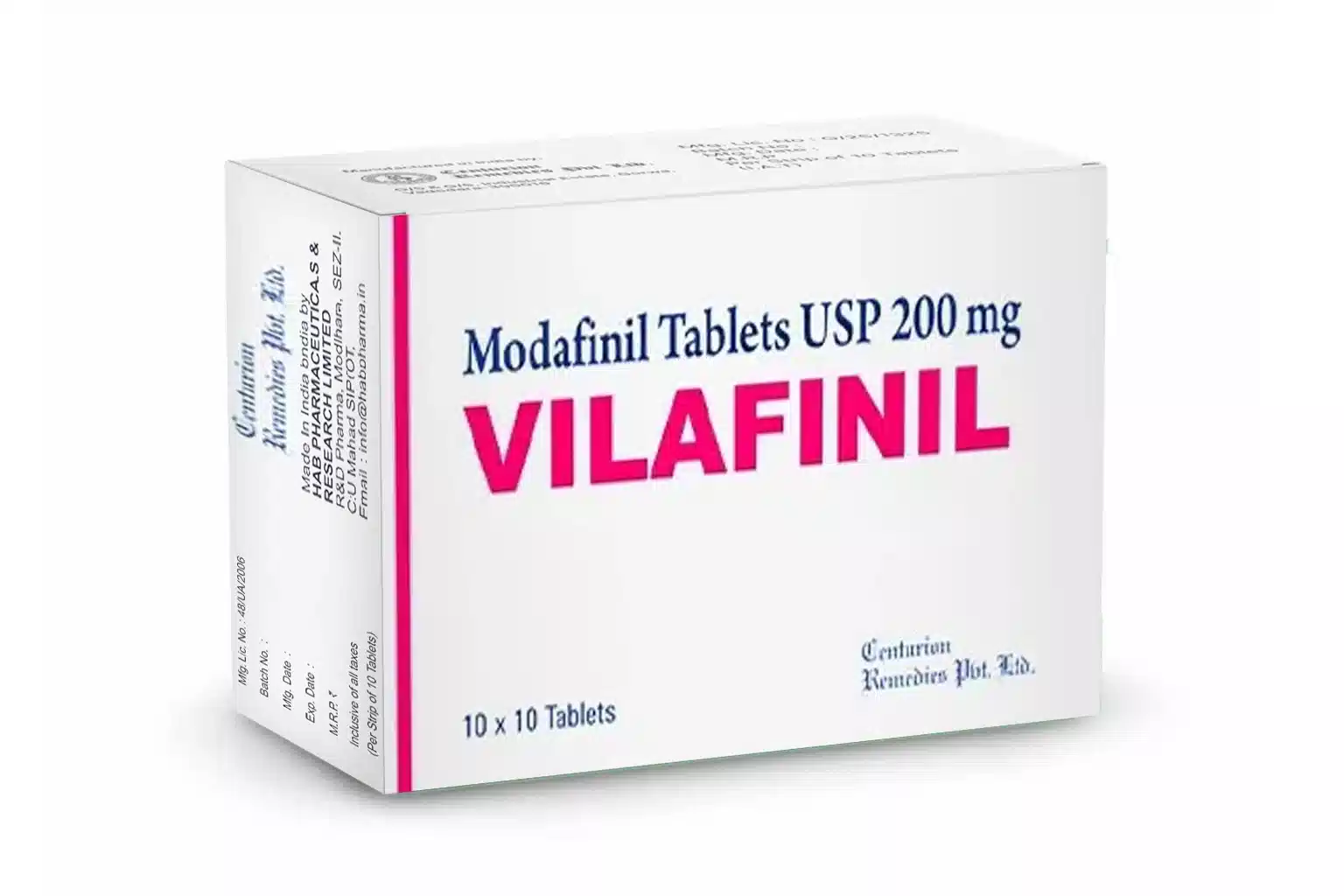
Vilafinil 200 mg
Price range: $69.00 through $395.00 -
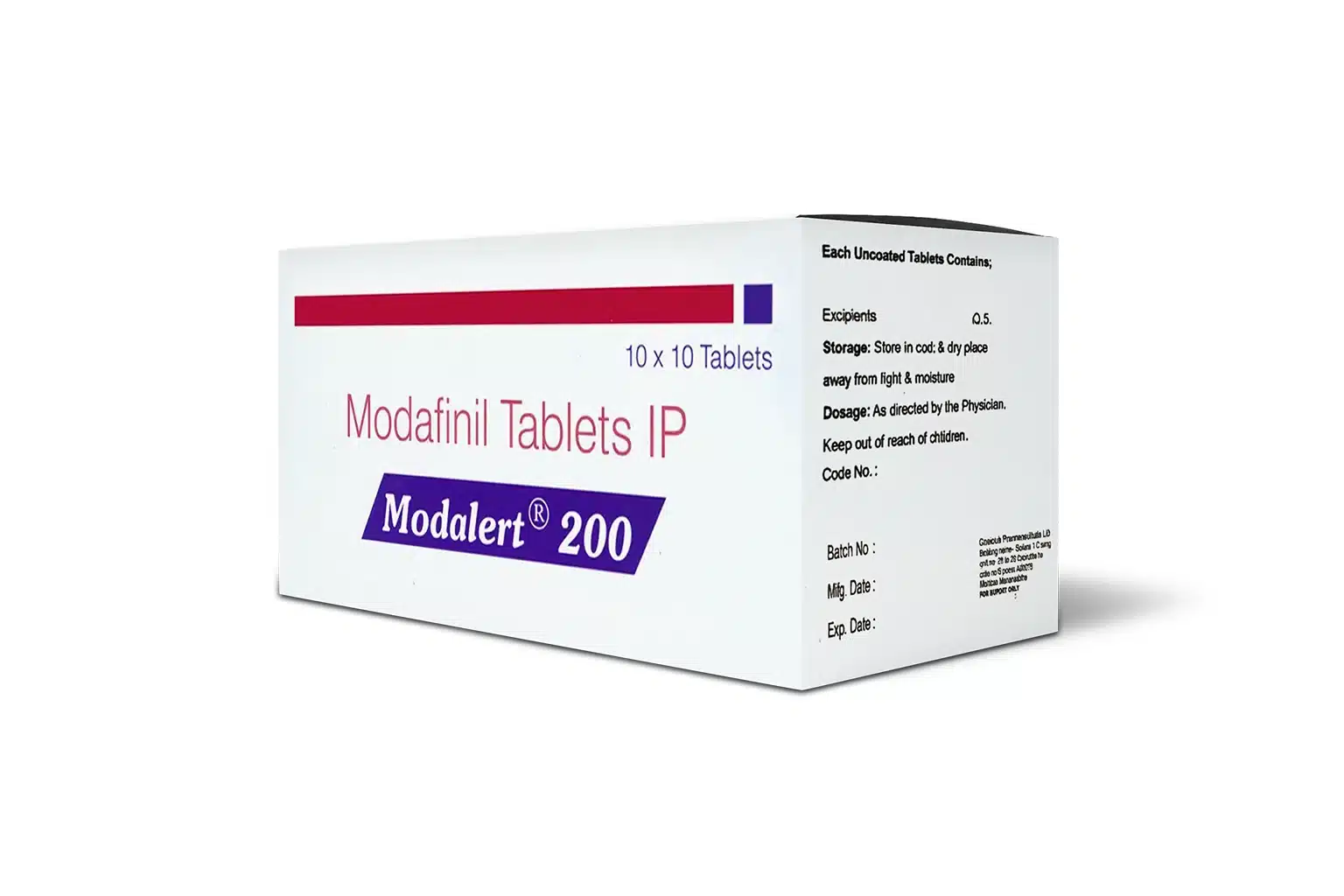
Modalert 200 mg
Price range: $69.00 through $449.00 -
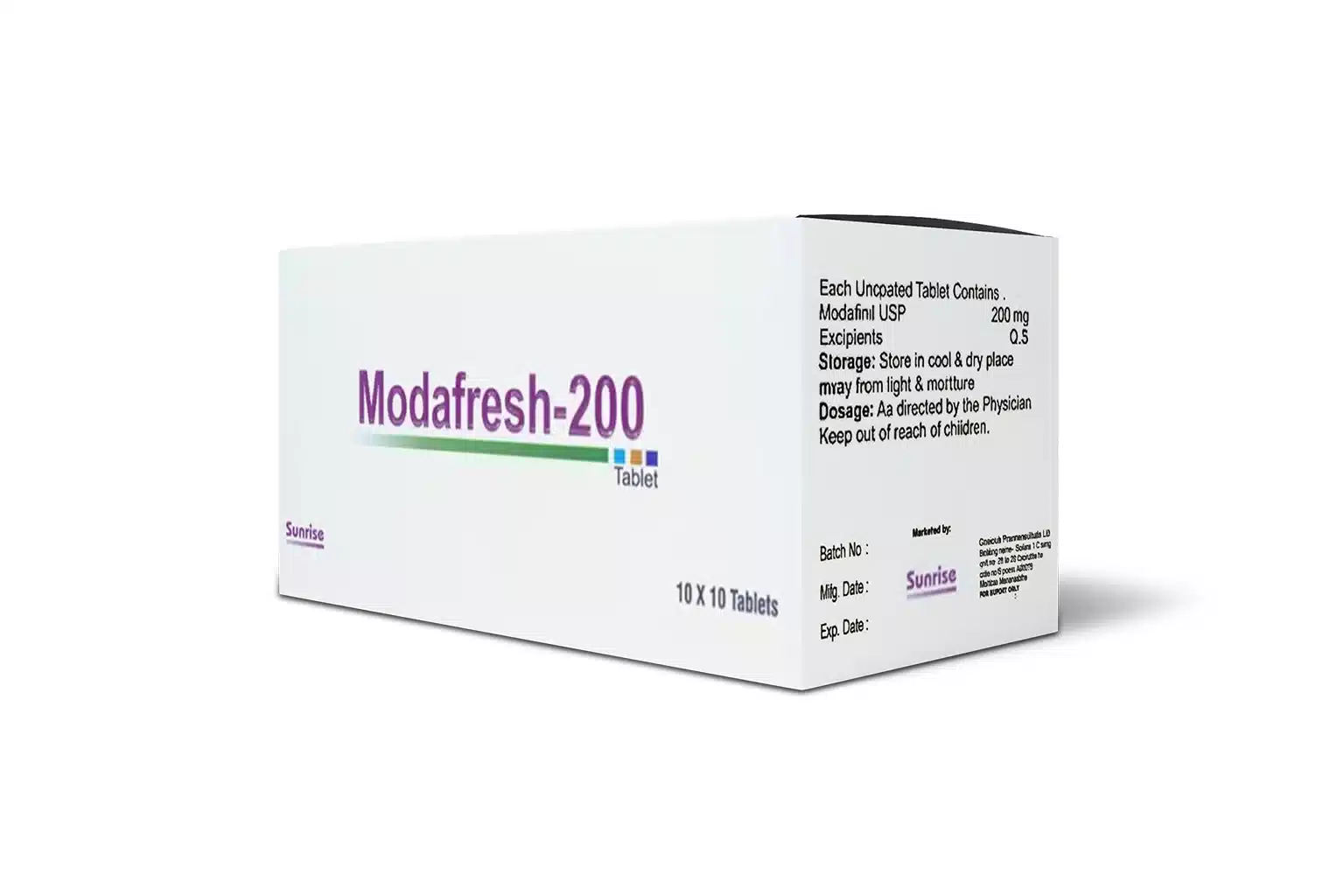
Modafresh 200 mg
Price range: $65.00 through $329.00


Two people take 200mg at the same time. One finds effects mostly gone by 8 PM. The other is still fully wired at midnight. Same drug, same dose, dramatically different experiences. This isn’t placebo or psychology. It reflects real biological variation in how individuals process modafinil.
Liver enzyme activity is the primary driver. Modafinil is metabolized primarily through the CYP3A4 and CYP2C19 enzyme pathways in the liver. People with high enzyme activity clear the drug faster. People with lower activity or specific genetic variants that reduce CYP2C19 function clear it considerably more slowly. You cannot determine which category you’re in without genetic testing, though you can observe patterns in your own experience over time.
Age matters in the expected direction. Liver function generally declines gradually with age, which means older adults tend to experience longer modafinil duration and should generally consider lower doses than younger users.

Kidney function plays a secondary role. While modafinil is primarily hepatically metabolized, its inactive metabolites are renally cleared. Impaired kidney function can allow metabolite accumulation that extends the overall clearance timeline.
Other medications significantly affect duration. CYP3A4 inducers, substances that increase enzyme activity, accelerate modafinil clearance. These include rifampicin, carbamazepine, and some herbal products like St. John’s Wort. CYP3A4 inhibitors work the opposite way, slowing clearance and extending duration. Certain antifungals, some HIV medications, and grapefruit consumption fall into this category.
Body composition has a modest effect. Modafinil is not significantly lipophilic, meaning it doesn’t accumulate extensively in fat tissue, but metabolic rate and body composition still influence overall clearance speed to some degree.
Cognitive Effects Don’t Track Perfectly With Plasma Levels
Here’s something that makes modafinil duration more complicated than simple pharmacokinetics suggests. The duration of cognitive effects modafinil produces doesn’t map neatly onto plasma concentration curves.
Some users report that the subjective sense of sharp focus peaks somewhere between three and six hours after taking modafinil, then gradually softens while a more general alertness persists for several more hours. Others report essentially consistent wakefulness for eight to ten hours before any noticeable decline. The profile depends partly on individual neurochemistry, partly on baseline sleep status, and partly on the cognitive demands of what you’re doing during those hours.
Sleep deprivation changes the picture meaningfully. Someone taking modafinil after a normal night of sleep experiences different duration and intensity than someone taking it to compensate for significant sleep deprivation. In the latter case, the wakefulness-promoting effects work harder against greater biological pressure to sleep, which can alter both how the drug feels and how cognitive effects are distributed across its duration.
The nature of the cognitive task matters too. Modafinil’s effects on sustained attention during monotonous tasks are well-documented. Its effects on complex creative thinking or novel problem-solving are less consistent and the duration of benefit for these functions may differ from its effects on simple alertness.
Modafinil vs Armodafinil Duration: The Practical Difference
This comparison comes up constantly and deserves a direct answer rather than the vague “armodafinil lasts longer” summary that most sources provide.
Armodafinil is the R-enantiomer of modafinil. Standard modafinil contains both R and S enantiomers in equal amounts. The S-enantiomer has a shorter half-life, roughly three to four hours. The R-enantiomer has a much longer half-life, closer to ten to fourteen hours. When you take modafinil, you’re essentially taking equal amounts of a shorter-lasting and a longer-lasting compound simultaneously.
Armodafinil contains only the R-enantiomer. This means its plasma concentration curve behaves differently. Rather than the relatively rapid early peak that racemic modafinil produces from the combined enantiomers, armodafinil maintains higher plasma concentrations for a more sustained period later in the day. The clinical result for many users is that armodafinil feels smoother and more evenly distributed across its duration. The sharp early peak is less pronounced. The sustained later effect is more consistent.
In terms of modafinil vs armodafinil duration, the practical difference for most users is that armodafinil at standard doses of 150mg tends to feel active for twelve or more hours with a relatively flat profile, compared to modafinil’s more peak-and-taper pattern over a similar or slightly shorter timeframe. Neither is universally better. The choice between them depends on whether you prefer modafinil’s earlier strong peak or armodafinil’s more sustained later effect.
Modacare 200mg: Standard Dosing in Context
Modacare 200mg is a standard modafinil formulation at the most commonly prescribed dose. Understanding duration in the context of this specific dose matters practically.
At 200mg, most healthy adults can expect meaningful wakefulness effects for ten to twelve hours. Cognitive enhancement effects are typically noticeable for eight to ten hours. Residual alertness that might interfere with sleep can persist for twelve to fifteen hours from administration time.
Working backward from when you want to sleep, a rough guideline for Modacare 200mg administration: if you want to sleep by 11 PM, taking it after 7 AM gives the medication sufficient clearance time for most people. If you’re a slow metabolizer, even earlier administration becomes preferable. If you’ve taken it and find you’re still alert at midnight, that information about your personal clearance rate is worth incorporating into timing decisions going forward.
Some users split doses, taking 100mg early morning and another 100mg at midday, finding this produces more consistent coverage across a longer day without an excessive concentration peak. Whether this approach suits you depends on your specific needs and how you respond to the medication individually.
Practical Timing Strategies That Account for Duration
Getting the timing right is really the whole game with modafinil. The pharmacology is fixed. What you can control is when you introduce it relative to your sleep requirements.
For a standard workday with an 11 PM sleep target, most people do well taking Modacare 200mg between 6 and 8 AM. The effects cover the working day and begin tapering during the evening. If your sleep schedule runs later, push the dose forward accordingly. If you run early, earlier administration gives more clearance buffer.
For shift workers the calculation is different. Someone starting a night shift at 10 PM might take modafinil at 9 PM to cover the shift duration without the medication extending into their post-shift sleep window. This requires understanding your approximate clearance rate, which you develop through experience with the medication under medical supervision.
One consistent recommendation from clinicians who prescribe modafinil regularly: track your timing and sleep latency for the first several uses. If you’re consistently alert well past your intended sleep time, administer earlier next session. If effects feel insufficient in the afternoon, your clearance may be faster than average and timing adjustment or dosage discussion with your prescriber makes sense.
What Duration Means for You Practically
Modafinil is genuinely useful for many people. Its duration is also genuinely long, longer than many users initially expect, and the consequences of poor timing are felt the following day when sleep was disrupted. Understanding the modafinil half-life and the factors affecting individual clearance isn’t merely academic. It’s the practical knowledge that separates people who use this medication effectively from those who spend nights staring at their ceiling wondering why they’re still wide awake.
Take it early. Understand that your clearance rate might differ from what you read online. Give the medication time to reveal its pattern in your specific physiology before drawing conclusions. And if sleep disruption persists despite morning administration, that conversation belongs with your prescriber rather than ending with a later bedtime.
Frequently Asked Questions
- What is the modafinil half-life and why does it matter for timing?
Modafinil’s half-life is twelve to fifteen hours for most adults. This means half the drug remains in your system twelve to fifteen hours after peak concentration, not twelve to fifteen hours after you took it. Since peak concentration arrives two to four hours after ingestion, the drug remains substantially active well into the evening from a morning dose. Timing your dose with this window in mind prevents the common mistake of taking it too late and spending the night unable to sleep.
- Does food affect how long modafinil lasts?
Food delays absorption rather than significantly affecting total duration. A high-fat meal can push peak concentration an hour or more later than if taken fasted. This matters for onset timing but doesn’t meaningfully change the overall duration of clearance. Taking Modacare 200mg with food will delay when you feel peak effects but doesn’t substantially shorten how long the drug remains active.
- Why do I feel modafinil effects for much longer than some people report?
You’re likely a slower metabolizer, either genetically or due to factors like age, liver function, or concurrent medications. Individual variation in CYP2C19 and CYP3A4 enzyme activity creates genuine differences in clearance speed between people. If you consistently find effects lasting significantly longer than twelve hours, discussing this with your prescriber may indicate a lower starting dose would produce adequate effect with reduced duration issues.
- Does the duration shorten with regular use?
Tolerance to modafinil develops differently than with traditional stimulants. Some users report mild reduction in peak effect intensity with daily use, but significant tolerance requiring dose escalation is not typical with modafinil at standard doses. Duration doesn’t markedly shorten with regular use for most people. If you find effects declining significantly, factors like sleep quality, stress load, and nutrition are more likely explanations than pharmacological tolerance.
- Is armodafinil better than modafinil for people sensitive to the strong early peak?
Often yes. The modafinil vs armodafinil duration comparison shows armodafinil producing a flatter, more sustained plasma concentration curve that many users find produces more consistent effects without the pronounced early peak. If you find modafinil’s initial few hours uncomfortably intense but appreciate the sustained wakefulness, armodafinil at 150mg is worth discussing with your prescriber as an alternative.