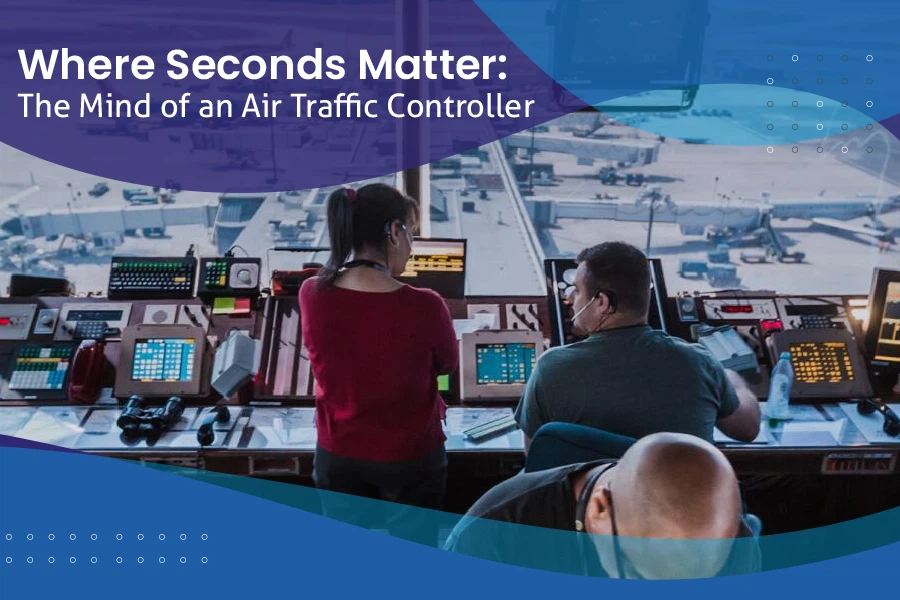
The high-stake environments demand sharp consistent performance. Air controllers rely on several mental abilities to maintain safety in highly complex situations.
Controllers need to maintain focus with extreme minuteness without losing track on any aircraft in their sector. Losing track means losing lives and so a single mistake can lead to a drastic accident. Sustained attention helps to identify the risk factor early and also helps in taking corrective action.
One of the best cognitive functions during such jobs is rapid decision-making. Situations can change in a fraction of second in the airspace due to weather changes, technical issues or sudden flight direction adjustments. When such situations arise it is the responsibility of the air traffic controller to evaluate multiple variables and make the right decision within seconds.
Air traffic controllers constantly store and process information such as flight number, altitudes, heading, weather updates, speeds instructions, etc. Strong working memory helps to maintain smooth aircraft travel simultaneously.
Managing so many aircrafts simultaneously is not a cup of tea. It is the most responsible job in the world. Fatigue management during such environments can become a bit difficult. Controllers must take proper rest along with some techniques to manage fatigue.
Air controllers cannot predict what situation is going to rise when and thus they need to be aware of any drastic situation. Maintaining a mental picture of the entire airspace is critical. Controllers must try and interpret which aircraft is at what position and anticipate future movements.
High workload and responsibility can create intense pressure. Controllers need to remain calm even during worst situations because if they panic in such situations it can worsen the case.
When these cognitive functions operate at optimal levels, controllers can effectively maintain vigilance in air traffic operations and ensure smooth coordination across the aviation network.
Fatigue and Sleep Challenges in Air Traffic Controllers
Despite the importance of air traffic controller alertness, maintaining constant vigilance is not always possible. Air traffic control is a 24/7 profession, and controllers often work rotating shifts that include nights, early mornings, weekends, and holidays. These irregular shifts lead to disturbance in the circadian rhythm that is the body’s sleep and wake regulator. When this natural rhythm is disturbed it can lead to fatigue, slow reaction times, cognitive impairment, decreased situational awareness and reduced alertness. Fatigue can affect several aspects of performance due to reduced attention span, slower decision making, memory lapses, communication errors, delayed time to detect errors, etc.
All these risk factors lead to strict limited working hours with mandatory rest breaks and fatigue management. These measures help ensure that controllers remain mentally sharp and capable of maintaining vigilance in air traffic operations.
In some cases, medical help may be required to promote wakefulness and cognitive performance. Physicians may prescribe medications to overcome such conditions and improve vigilance. One of the medications that is highly prescribed for such conditions is Artvigil 150 mg. Artvigil consists of Armodafinil which is its active ingredient. It is commonly prescribed for the treatment of Narcolepsy, Sleep apnea, Shift Work Sleep Disorder all of which are sleep disorders and they also affect daytime alertness significantly. By promoting wakefulness, medications like Artvigil 150 mg may help individuals maintain better attention and cognitive performance when managing demanding tasks that require sustained focus.
Technology and Human Vigilance in Air Traffic Control
Modern aviation relies mainly on automation and novel technologies. Radar systems, satellite navigation, and automated alert systems assist controllers in tracking aircrafts and detecting potential issues behind the wheels. However, automation cannot take over human judgement. It only works as a support system to the air traffic controllers alertness.
Below listed are some of the technologies in air traffic management:
Radar surveillance systems
Radar allows controllers to track aircraft position, altitudes and speed in real time.
Collision avoidance system
These systems are designed in such a way that it allows the air traffic controllers to
detect errors that can cause collision or when aircrafts may be approaching unsafe distances.
Flight data processing systems
These systems organize flight plans and operational data, helping controllers monitor traffic flow efficiently.
Radio and digital communication systems allow the controllers to maintain an amazing communication with the pilots.
Digital and Remote Towers
High-definition cameras and sensors are used to create virtual , remote towers to manage the air traffic rather than sitting in local towers. Sometimes the ATC can control the air traffic from thousands of kilometres away as well.
Unmanned Traffic Management
These are specialized systems to manage drones and unmanned aircrafts in the specified airscape.
The major work still lies in the hands of ATC as these technologies can only improve the efficiency.
Training and Mental Preparation of Air Traffic Controllers
ATC undergoes rigorous training before they can actually manage the real airspace. Training programs typically include:
Controllers use real life simulation programs for their training. They practice handling complex aircraft situations using advanced simulations.
Cognitive skill Development
Developing cognitive skills is quite essential and demanding. While learning they are taught skills to improve attention, situation awareness and decision making.
Emergency response training
Controllers are trained to manage emergencies such as engine failures, weather disruptions, fuel shortage, communication problems, etc.
Stress management techniques
Controllers are taught techniques to manage stressful conditions, maintain calmness and composure during demanding situations.
Mindfulness and relaxation
Techniques like yoga, deep breathing, visualization are practiced to improve concentration and reduce fatigue.
This extensive preparation ensures that controllers can help in maintaining air traffic controller alertness and respond effectively even in unexpected circumstances.
Supporting Cognitive Performance in Demanding work environments
Maintaining cognitive performance in a high-stake environment requires a combination of medications, healthy sleep schedules, stress management, changes in sedentary lifestyle. Many physicians might prescribe wakefulness promoting agents like Modafinil and Armodafinil like Artvigil 150 mg.For professionals working in roles where sustained attention is critical, proper management of sleep health can play an important role in maintaining productivity and safety. However, such medications should only be taken under proper medical supervision to ensure safe and effective use.
Why Human Behaviour Still Matters in Aviation?
Human behaviour plays a crucial role in managing the high stake environments. Not everything can be managed by technology and automation. Air traffic controllers act as the central decision makers that interpret the complex data, detect errors and ensure that the aircrafts are flying at appropriate distances. Their ability to maintain air traffic controller alertness and high levels of cognitive performance in high-stakes environments is what keeps global aviation running smoothly. Every instruction that is given, every radar screen that is monitored, every decision that is taken contributes to the safety of millions of passengers travelling by air.
Conclusion
Air traffic Controllers are one of the most demanding and yet the most complex cognitive performance job profiles. Their role requires exceptional concentration, constant vigilance and quick decision making ability.
Maintaining air traffic controller alertness is quite crucial to prevent mid-air conflicts, manage complex flight patterns, and ensure safe aircraft operations. The next time you board a flight, remember that beyond the pilots in the cockpit, there is an entire network of highly skilled professionals working behind the scenes to keep the skies safe.
FAQs
1. How can fatigue affect cognitive performance?
The key ways how fatigue affects cognitive performance are slower processing speed, memory lapses, less capacity to focus, difficulty with decision making, etc.
2. What are the sedentary techniques to improve sleep schedules?
Sedentary techniques include maintaining a strict, consistent sleep-wake schedule (even on weekends), limiting screen time 1-2 hours before bed, using the bedroom only for sleep, and implementing relaxation routines
3. How do air traffic controllers practice vigilance during long work shifts?
Air traffic controllers maintain vigilance in air traffic operations through structured shift schedules, mandatory rest periods, regular breaks, and strict fatigue management policies.
4. How do air traffic controllers handle emergencies?
Air traffic controllers are trained to handle emergencies like technical failures, severe weather changes, in-flight medical conditions and so on.
5. What challenges do air traffic controllers face in their job?
Air traffic controllers face challenges such as high workload, long shifts, irregular sleep schedules, and the constant need for intense concentration.