Active Learning Strategies During Lectures
Transform yourself from a passive listener into an active participant, and you’ll find staying alert while studying becomes significantly easier.
The Cornell Note-Taking Method
This structured approach to note-taking keeps you engaged while creating an effective study tool. Divide your paper into three sections: a narrow left column for keywords, a wider right column for notes, and a bottom section for a summary. During the lecture, take notes in the right column. Immediately after class, add keywords to the left column and write a summary at the bottom.
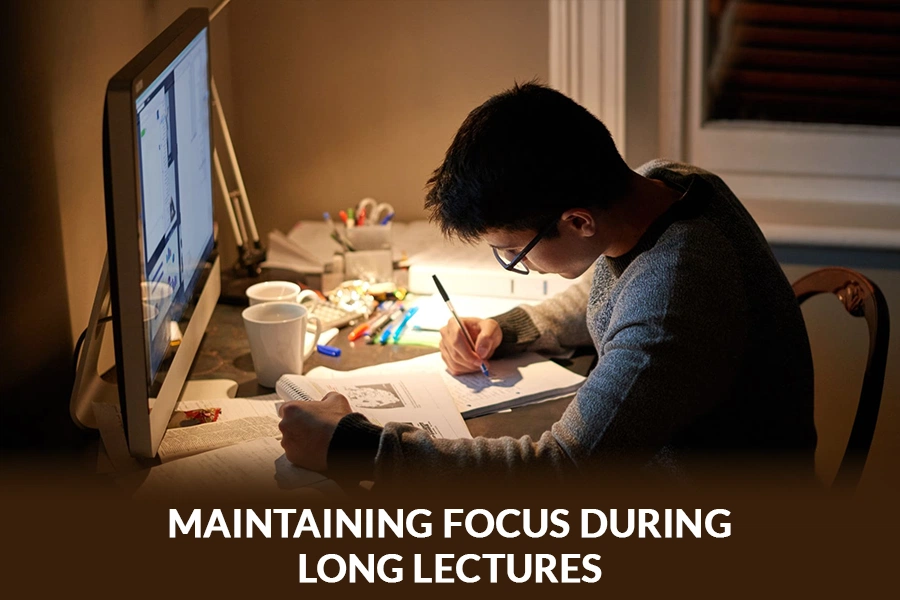
The physical act of handwriting engages different neural pathways than typing, improving retention and keeping you more alert. Resist the temptation to simply type verbatim what the professor says; this requires minimal cognitive processing and allows your mind to wander.
Strategic Seating Choices
Where you sit dramatically affects your ability to focus during long lectures. Choose seats in the front third of the classroom where you’re more visible to the instructor and less distracted by other students. Proximity to the professor also creates a subtle psychological pressure to stay engaged.
Avoid seats near doors, windows with distracting views, or groups of friends who might tempt you into side conversations. Your seating choice is a commitment to your education—choose wisely.
Engage with the Material
Ask questions, even if just in your mind. Try to predict where the lecture is going, connect new information to concepts you already understand, or identify potential exam questions. This active mental engagement transforms passive listening into dynamic learning.
When appropriate, participate in class discussions or answer the professor’s questions. The act of formulating and expressing thoughts keeps your brain actively processing information rather than drifting into autopilot mode.
Physical Strategies for Sustained Alertness
Your physical state directly influences your mental state. Small adjustments to your posture, movement, and environment can significantly impact your ability to stay alert.
Posture and Movement
Sit upright rather than slouching or leaning. Good posture improves oxygen flow to your brain and prevents the drowsiness that comes with relaxed positions. If the lecture format allows, stand briefly at the back of the room, or shift positions regularly.
Subtle movements like rotating your ankles, tensing and relaxing your leg muscles, or doing discreet hand exercises can increase blood flow without disrupting the class. These micro-movements provide just enough physical stimulation to maintain alertness.
Hydration Matters
Keep a water bottle with you and sip regularly throughout the lecture. Dehydration impairs cognitive function and contributes to fatigue. The act of drinking also provides brief mental breaks that can help reset your attention.
Cold water is particularly effective; the temperature provides a mild stimulating effect that can sharpen focus when you feel your attention slipping.
Managing Energy Throughout the Day
For students juggling multiple long lectures in a single day, energy management becomes crucial. Think of your mental energy like a smartphone battery, you need to preserve it strategically and recharge when possible.
The Power of Strategic Breaks
Between classes, resist the urge to scroll social media or binge-watch videos. Instead, take a 10-minute walk outdoors, do some light stretching, or practice brief meditation. These activities recharge your mental batteries far more effectively than passive screen time.
Natural light exposure during breaks helps regulate your circadian rhythm, improving overall alertness and making it easier to stay focused during subsequent lectures.
Timing Your Caffeine Intake
Caffeine can be a useful tool for maintaining alertness, but timing is everything. Consume coffee or tea 30-45 minutes before your lecture begins for peak effect during class. Avoid excessive caffeine consumption, which can lead to jitters, anxiety, and eventual crashes that make concentration even more difficult.
For afternoon or evening lectures, be mindful that late caffeine intake can interfere with your sleep that night, creating a vicious cycle of fatigue and dependence.
When to Seek Additional Support
If you consistently struggle with excessive daytime sleepiness despite adequate sleep, proper nutrition, and good study habits, it may indicate an underlying issue worth discussing with a healthcare provider.
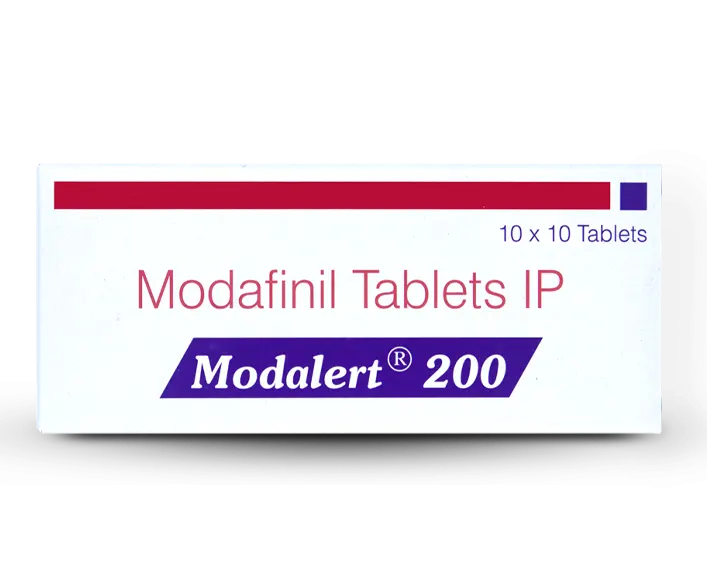
Some students explore options like Modavinil 200mg, a prescription medication containing modafinil, which is FDA-approved for treating specific sleep disorders including narcolepsy, shift work sleep disorder, and obstructive sleep apnea. This medication affects neurotransmitters in the brain that regulate the sleep cycle.
However, it’s critical to understand that Modavinil 200mg is a prescription medication requiring medical supervision. It’s not approved or recommended as a study aid for healthy students. Using prescription medications without proper medical guidance carries health risks and ethical concerns. If you’re experiencing persistent difficulty with alertness that affects your academic performance, consult a healthcare provider or your campus health center to identify potential underlying causes and discuss appropriate interventions.
Building Long-Term Focus Capacity
Like physical fitness, your ability to maintain sustained attention improves with practice. Start with shorter focus periods and gradually extend them. The Pomodoro Technique—studying in focused 25-minute intervals with short breaks, can help build your concentration stamina over time.
Regular exercise, even just 20-30 minutes of moderate activity several times per week, improves overall cognitive function and makes sustaining focus during long lectures significantly easier. Physical fitness and mental sharpness are more connected than most students realize.
Creating Your Personal Focus System
Everyone’s optimal conditions for concentration differ slightly. Experiment with various student concentration tips to discover what works best for you. Keep a brief log noting which strategies help you maintain mental clarity for studying and which don’t deliver results.
Your personalized system might combine front-row seating, strategic caffeine timing, active note-taking, regular hydration, and specific pre-lecture meal choices. The key is developing a repeatable approach that you can implement consistently.
Frequently Asked Questions
Q1: How can I stay focused during early morning lectures?
Prioritize sleep the night before, eat a protein-rich breakfast, and expose yourself to bright light immediately upon waking. Sit in front-row seats and engage actively with note-taking. The first 30 minutes after waking are typically groggiest, so plan accordingly.
Q2: Is it better to take notes on a laptop or by hand during long lectures?
Research shows handwritten notes improve retention and comprehension. Writing by hand requires more cognitive processing than typing, which keeps you more engaged and helps you stay alert while studying. However, if you have a documented need for typed notes, use apps that minimize distractions.
Q3: What should I do if I start falling asleep during a lecture?
Stand at the back of the room if possible, splash cold water on your face during a brief break, or discreetly do subtle stretches. If drowsiness is severe and persistent despite adequate sleep, consult a healthcare provider to rule out underlying sleep disorders.
Q4: How many hours should I study between lectures to maintain focus?
Quality matters more than quantity. Use the Pomodoro Technique with 25-minute focused study sessions followed by 5-minute breaks. After four sessions, take a longer 15-30 minute break. This rhythm prevents mental fatigue while maximizing retention.
Q5: Can certain foods help me concentrate better during lectures?
Yes. Foods rich in omega-3 fatty acids (fish, walnuts), complex carbohydrates (whole grains), and antioxidants (berries, dark chocolate) support cognitive function. Avoid sugary snacks or heavy meals that cause energy crashes. Stay hydrated throughout the day.