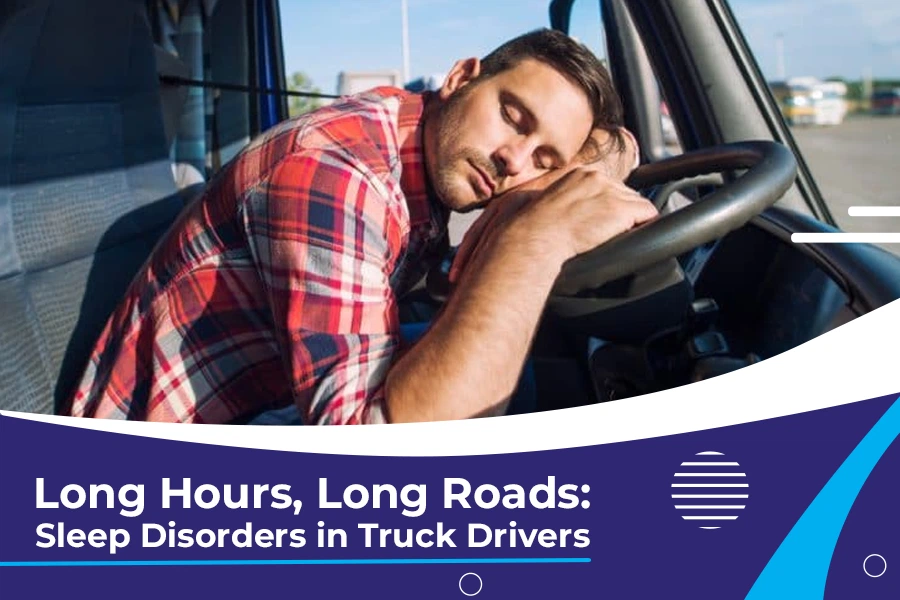
Truck driver fatigue is not simply occasional tiredness-it is a state of physical and mental exhaustion that reduces:
- Reaction time
- Decision-making ability
- Focus and concentration
- Risk assessment
- Situational awareness
Research shows that being awake for 18-24 hours can impair performance similarly to alcohol intoxication. At highway speeds, even a moment of delayed reaction can be dangerous.
Excessive Daytime Sleepiness: A Warning Sign
Excessive daytime sleepiness is also known as hyperinsomnia. It is a condition that makes you feel extremely sleepy during the day. It is a state of persistent drowsiness, reduced alertness, and a strong urge to sleep during the day even after sufficient nighttime sleep. Common causes of Excessive daytime sleepiness are:
- Sleep disorders like Narcolepsy, Shift work sleep disorder, Obstructive Sleep apnea, etc.
- Lifestyle factors
- Medical conditions like Parkinson’s disease, depression, stroke, multiple sclerosis, thyroid issues, etc.
- Medications like sedatives, antidepressants, antihistamines and anti-hypertensives.
Warning signs of excessive daytime sleepiness are:
- Heavy eyelids
- Persistent tiredness
- Frequent yawning
- Lane drifting
- Difficulty in remembering the last few miles that the driver has driven
- Strong urge to sleep after every few miles
If these signs are persistent then medical evaluation is recommended. The most commonly prescribed medication for such conditions is Armodavinil 150 mg which needs to be administered under medical supervision.
Health Risks related to Sleep disorders in Truck Drivers
Truck drivers with sleep disorders face severe health related issues that affect the driver’s ability to drive properly. The health conditions that can be caused due to sleep disorders in Truck disorders are:
- Cardiovascular conditions
- Metabolic diseases
- Obesity
- Severe Chronic Fatigue and daytime sleepiness
- Mental health issues
- Cognitive impairment
- Workplace accidents
Addressing sleep health early can help in preventing long term complications.
Circadian Rhythm & the 3 am crash window
The human body operates on a natural 24-hour internal clock known as the circadian rhythm, which controls sleep, alertness, hormone release, and cognitive performance. For truck drivers working overnight routes, this rhythm becomes severely disrupted. Between 2:00 am and 6:00 am-often called the “3 am crash window”-the body reaches its lowest level of alertness. Core body temperature drops, melatonin levels peak, and reaction time slows significantly. Even highly experienced drivers can experience microsleeps during this period, where the brain briefly shuts down for a few seconds without warning. At highway speeds, those few seconds can mean traveling hundreds of feet without full awareness. This biological dip is not about lack of discipline-it is a natural physiological response, and when combined with chronic sleep deprivation, it significantly increases the risk of truck driver fatigue and excessive daytime sleepiness.
Red flags requiring Immediate Medical Examination
Truck drivers should seek a medical evaluation any of the following is experienced:
- Persistent daytime sleepiness: If after sleeping for more than 7-9 hours if you experience daytime fatigue or sleepiness do seek immediate medical help.
- High-risk Physical Indicators: Physical indicators like obesity, BMI of 28 or higher, etc
- Sleep apnea symptoms: The symptoms such as loud, frequent snoring, choking or gasping during sleep, excessive morning headaches, etc.
- Safety sensitive warning signs: Dozing off while driving, diverting at wrong exits, drifting lanes, driving at extreme speeds can be the warning signs that you are half-asleep.
- Ongoing fatigue despite frequent rests
- Sudden sleep episodes
Early diagnosis of conditions like sleep apnea or shift work sleep disorder can significantly improve alertness and safety.
How are Sleep disorders in truck drivers diagnosed?
Diagnosis of sleep disorders in truck drivers is one of the most important tasks. Key diagnostic steps include:
- Medical History & Physical Examination: Physicians review symptoms like chronic snoring, gasping, extreme fatigue to detect the underlying causes.
- Sleep diary or sleep logs: Maintaining a sleep log for a week or two helps to diagnose the sleep disorder easily.
- Polysomnography: An overnight, in-lab, or home test that measures brain activity, oxygen levels, heart rate, and eye/leg movements.
- Actigraphy: A device that measures the sleep-wake cycle for several days
- Multiple Sleep Latency Test(MSLT): It is a daytime study that measures how fast you fall asleep in a quiet environment and is especially used for narcolepsy diagnosis.
- Epworth Sleepiness Scale: It is used to assess daytime sleepiness. It is a short questionnaire used to measure excessive daytime sleepiness.
Practical Steps to Improve sleep on the road
While all the jobs are difficult and straining – I think truck drivers top the list. Unstoppable journeys, long miles, irregular sleep schedules, tight delivery schedules and few other reasons contribute to the difficulty risks associated with the job. Steps to improve sleep are:
- Maintain a consistent sleep schedule whenever possible
- Avoid heavy meals before bedtime
- Limit caffeine intake before sleep hours
- Use blackout curtains or sleep masks during daytime sleep
- Keep the cabin cool and bright
- Undergo regular sleep screenings
- Use earplugs or noise cancellation devices to block the noises of street or hotels
- Pack a neck pillow for breaks or to improve truck comfort
Final Thoughts
Sleep disorders in truck drivers are more common than many realize. From truck driver fatigue to shift work sleep disorder and excessive daytime sleepiness, these conditions can impact health, performance, and road safety. Prioritizing sleep is not a sign of weakness-it’s a professional responsibility.
Healthy drivers mean safer roads for everyone.
FAQs
1. How common are sleep disorders in Truck drivers?
According to reports, 28-35% of professional truck drivers may have undiagnosed sleep disorders.
2. Is truck driver fatigue the leading cause of accidents?
Yes. Truck driver fatigue is consistently identified as the major cause of the leading factors in heavy truck accidents.
3. What causes excessive daytime sleepiness in truck drivers?
The common causes of daytime sleepiness in truck drivers are sleep disorders like sleep apnea, narcolepsy, shift work sleep disorder, insomnia, etc.
4. Can truck drivers legally drive with sleep apnea?
Mild cases of sleep apnea are generally allowed to drive without disqualifying their license. Moderate to severe cases of sleep apnea can be disqualified from driving.
5. How do sleep disorders in truck drivers affect cognitive performance?
Sleep disorders in truck drivers affect cognitive performance by contributing to anxiety and depression.